Creative Zoning Solutions to Enable Missing Middle Housing
Key Takeaways
- Duplexes, fourplexes, courtyard apartments, and walk-ups balance density with neighborhood character.
- HCreative zoning solutions, like reducing setbacks and permitting ADUs, can facilitate more diverse housing types in existing neighborhoods
- Flexible parking policies and exemptions for small lots are essential to making infill projects financially viable and sustainable
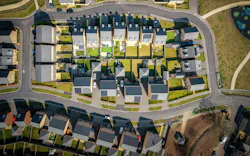
The housing shortage isn’t just about numbers—it’s about type.
"Missing middle" housing refers to building forms such as duplexes, fourplexes, courtyard apartments, and 3–to-5-story walk-ups that provide more units than single-family homes while remaining human-scaled.
These forms have proven successful in absorbing demand without overwhelming infrastructure or altering neighborhood character. Additionally, while large-scale projects often focus on studios and one-bedroom units, missing middle housing can offer unit sizes that better accommodate families.
Facilitating Missing Middle Housing
In Florida, many zoning codes still prioritize single-family districts and high minimum lot sizes, limiting the ability to build these smaller multifamily types. Creative zoning solutions can help by ...
- Expanding multifamily permitting in targeted need areas. Allow 3–5 story multifamily housing by right near transit and employment centers;
- Reducing minimum lot sizes and setbacks. Smaller lots should be able to host townhomes, triplexes, and courtyard apartments without excessive dimensional barriers.
- Allowing Accessory Dwelling Units. ADUs placed on a single-family home site provide an affordable option for accommodating an aging relative or college student without disrupting neighborhood character.
- Enabling clusters of smaller homes, which can create community-oriented infill projects that fit naturally into older neighborhoods.
Removing Punitive Standards
One of the biggest hurdles for missing middle housing is parking and loading requirements. Local zoning codes often mandate high minimums, exceeding market needs, which challenge the feasibility of infill development and contribute to a proliferation of vacant lots.
Municipalities should consider more flexible, context-sensitive parking policies to reduce development costs for infill housing by ...
- Setting right-sized parking minimums for low-rise multifamily units, especially near transit or in walkable neighborhoods.
- Allowing developers to demonstrate reduced parking needs through shared use agreements or transportation demand strategies.
- Providing exemptions for small lotsm, which have a different parking impacts than large suburban developments.
- Waiving or modifying loading requirements for small multifamily buildings, particularly where curbside loading zones or alleys suffice.
Case Study: Wynwood Norte Neighborhood Revitalization District
An illustrative example comes from Miami’s Wynwood Norte Neighborhood Revitalization District (known as the NRD-2), where the City of Miami enacted zoning reforms to encourage traditional small-scale residential buildings that reflect the area’s historic fabric.
Wynwood Norte was originally developed with 1920s and 1930s multifamily buildings—human-scaled and compatible with ground floor retail uses and corner stores.
Following on a Wynwood Norte Community Vision Plan in 2019, planners and community stakeholders developed a zoning framework that:
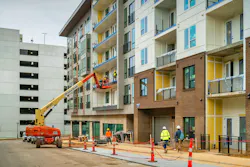
- Permits low-rise multifamily residential buildings (up to 3 stories) at a maximum density of 150 units per acre, with an ability to achieve a 4th story through affordable housing
- Encourages architectural forms consistent with traditional development patterns, and
- Removes minimum parking requirements for buildings less than 20,000 square feet
Rethinking Statewide Incentives
Lastly, statewide tax incentives should be expanded to encourage small-scale infill residential buildings.
Enacted in 2023, Florida’s Live Local Act was a landmark housing bill, offering broad-sweeping pre-emption of county and municipal zoning jurisdiction to allow significant development bonuses for projects with at least 40% of units designed affordable to households earning less than 120% Area Median Income.
Qualifying projects are able to access additional height (up to maximum permitted within 1 mile), floor area ratio (150% of the maximum permitted within the jurisdiction), and density (up to the maximum permitted within the jurisdiction)
While the Live Local Act has made important strides in encouraging affordable housing production, its structure skews toward larger projects.
For example, ad valorem tax exemptions authorized under the Act typically require a minimum of 70 units, but many infill sites and small-lot projects fall short of this threshold.
Smaller multifamily buildings align with neighborhood scale and can be delivered at lower construction costs, but without access to similar incentives, developers often struggle to make projects pencil out.
To broaden participation, policymakers should consider expanding tax incentives to projects with fewer than 70 units.
About the Author
 Steven J. Wernick, Esq.
Steven J. Wernick, Esq.
Steven J. Wernick, Esq. AICP is a partner in the Miami office of Day Pitney LLP, where he has practiced real estate law with a specialization in land use and zoning for nearly 20 years.