How a New Wave of Public-Private Partnerships Are Strengthening Florida’s Infrastructure
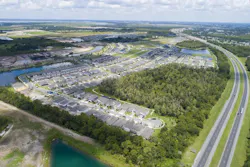
Florida’s growth story is no longer defined solely by rooftops rising from land that has otherwise only ever been cattle pastures.
Today, growth is a new state highway, a new multi-lane county road, a new school with ample acreage for related sports and recreation, or a new medical center or shopping center—infrastructure and transportation networks that are critical to the success of a modern master-planned community.
Essential Collaboration
As suburban expansion accelerates across Florida, counties and municipalities are stepping into a more active role working alongside private developers to deliver the infrastructure required to support long-term growth.
These public-private partnerships (PPPs) aren’t abstract policy ideas. They’re practical tools that are reshaping how communities are built and how homebuyers evaluate new places to live, attracting builders who want to capture that demand.
As a land investor and developer of master-planned communities across Florida, BTI Partners considers PPPs as probably the most critical factor in determining whether large-scale communities can move forward successfully ... or not at all.
Investing in Infrastructure
In central and northeast Florida, significant investment in transportation networks, utilities, and public facilities is increasingly necessary as new housing comes online.
A case in point is unfolding in southeast Osceola County, where a public-private effort between BTI Partners, Osceola County, and the City of St. Cloud is delivering more than $260 million in regional transportation improvements tied to BTI’s Crossprairie and Toho Trace master-planned communities.
These improvements support the county’s long-range mobility plan, creating new north-south and east-west connections in one of Central Florida’s fastest-growing residential corridors.
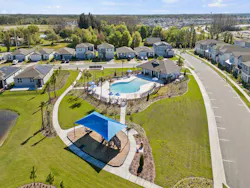
Through this PPP, community development districts have issued bonds to finance the construction of more than 12 miles of new framework roads, along with the dedication of over 160 acres of public right-of-way and the delivery of sidewalks, stormwater systems, lighting, landscaping, and signalized intersections.
Crossprairie and Toho Trace are two foundational communities south of Orlando that together span nearly 3,000 acres and anchor the broader East Lake Toho corridor.
Crossprairie, now under construction, includes approvals for 5,200 residential units and nearly 3 million square feet of commercial space across ~1,500 acres and is located adjacent to a new Florida Turnpike interchange south of Orlando.
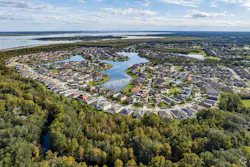
The neighboring Toho Trace community adds approximately 1,500 acres with 3,600 future homesites and a full slate of amenities.
The PPP has made it possible for BTI to design, permit, engineer, and construct a transportation network that goes well beyond typical development requirements. This level of collaboration is improving connectivity between Orlando, Kissimmee, and St. Cloud while reducing congestion on key routes.
The Takeway for Builders
For home builders, the takeaway is straightforward: these communities are supported by a multimodal road grid that is already planned, funded, and under construction. That infrastructure allows housing to be built with access and mobility addressed upfront, not deferred.
Just as important, PPPs extend beyond transportation. Land for schools, fire stations, and other public services is often conveyed as part of the master plan, allowing communities to grow in a way that supports residents from day one and provides local governments with the tax base needed to sustain those services over time.
For home builders, communities backed by this level of infrastructure planning are easier to underwrite, easier to phase, and easier to sell. Traffic concerns are reduced, political friction is minimized, and buyers experience neighborhoods that feel complete.
As Florida continues to grow, the developments that succeed will be the ones that treat infrastructure as a prerequisite. PPPs are making that possible and enabling builders to decide where to deploy capital next.
Communty Benefits
The benefit for communities is just as significant. When new infrastructure makes it possible to deliver attainable housing near employment centers, residents are able to remain in the communities where they work rather than having to live far away and commute to work.
That proximity strengthens local economies, supports a stable tax base, and helps sustain essential public services at a time when many small and mid-sized cities across the U.S. are facing population decline and fiscal pressure.
The opportunity lies in planning growth intentionally—balancing infrastructure investment, housing delivery, and long-term environmental stewardship to ensure communities remain viable well into the future.
About the Author
 Justin Onorato
Justin Onorato
As president and chief investment officer of Florida-based BTI Partners, Justin Onorato developes and executes real estate investment strategoies for BTI's master-planned communities across Florida and the southeastern U.S.