Build-to-Rent: How Housing Policy, Affordability, and Supply Converged to Forge a Durable Asset Class
Key Highlights
- The profile of BTR residents has shifted towards high-earning households seeking flexibility, privacy, and amenities.
- Supply constraints and higher borrowing costs are leading to disciplined growth in BTR development, emphasizing operational efficiency and scalable management models.
- Build-to-rent offers a durable, scalable solution to the housing shortage, supporting mobility and providing high-quality, purpose-built communities for diverse lifestyles.
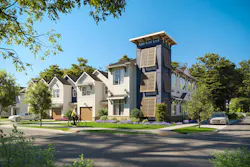
Rental and build-to-rent (BTR) single-family housing has rapidly matured from an experiment into a cornerstone of the country’s residential landscape and a sophisticated, institutional-grade asset class.
But today, BTR sits at a critical juncture in federal housing policy. In January of this year, the Trump Administration issued an Executive Order, "Stopping Wall Street from Competing with Main Street Homebuyers," which explicitly targets large-scale institutional investors from buying existing single-family homes.
It also directs the U.S Treasury and the Department of Housing & Urban Development (HUD) to prioritize sales to individual owner-occupants and restricts federal agencies from facilitating the acquisition of existing homes by large institutional entities.
Crucially, the order includes narrowly tailored exceptions for single-family homes and communities that are expressly planned, permitted, and constructed as rentals from the ground up, aka build-to-rent.
For the building community, this distinction is vital. Policymakers increasingly recognize that BTR developers and builders are adding new, much-needed supply to a national market still grappling with a housing shortfall estimated by some analysts at over 3 million units (as of April 2026, White House economists from the Council of Economic Advisers estimate a more severe shortage of 10 million houses).
By focusing on ground-up development, BTR aligns with federal priorities to expand inventory rather than consolidate it.
The Rise of Renters by Choice
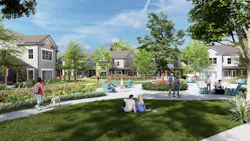
The profile of the BTR resident has undergone a permanent shift. While the category once served those unable to buy, today’s residents are increasingly renters by choice, in large part due to an increasing "buy-versus-rent" gap, which has reached a 105% monthly premium to buy versus rent in some high-growth markets, driving even high-earning households into BTR communities.
This cohort—primarily older Millennials, late-stage Gen Z, and downsizing Baby Boomers—seeks the privacy of a detached home and a private yard without the maintenance burdens or the variable costs of ownership.
The data reflects this preference. In 2026, professionally managed BTR communities continue to command significant rent premiums over traditional apartments, often ranging from 15% to 25% depending on the market, according to a study by Compass Mortgage.
In addition, renters are trading the "lifestyle excess" of urban high-rises for the practical utility of attached garages, pet-friendly yards and community amenities, and extra bedrooms that accommodate various lifestyle needs, including work-from-home and home-based businesses, hobbies, bounce-back children, and elderly parents.
The Economics of Housing Affordability
Economic pressures continue to act as a powerful tailwind for rental demand. Despite stabilization in home price growth, the "buy-versus-rent" gap remains wide in many high-growth metros.
Nationally, the median monthly cost for mortgaged homeowners has hovered around $2,000, with some high-cost hubs seeing ownership costs exceed rental payments by over $1,400 per month.
Importantly, a high percentage of BTR residents have the financial profile to qualify for a mortgage but choose the flexibility of a lease; the model also meets consumer preferences such as access to better schools and private yards.
The result is a "sticky" tenant base with retention rates, according to a recent report by John Burns Research & Consulting, averaging 68% compared to roughly 52% in traditional multifamily, which significantly reduces turnover costs and stabilizes net operating income (NOI).
Supply Constraints and Builder Opportunity
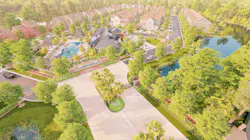
The BTR sector is moving into a period of "disciplined growth." Though deliveries peaked between 2024 and 2025, higher borrowing costs and tighter capital requirements to develop and build BTR communities have led to a projected step-down in building permits, housing starts, and home completions this year and next.
Census Bureau data for March 2026 shows building permits are down 7.4% compared to March 2025. Single-family starts are projected to grow only 1% in 2026, while multifamily starts are expected to fall by 5%, creating a "disciplined growth" environment that favors experienced BTR developers.
This constrained environment favors experience, and the argument for financing BTR development is bolstered by the following factors:
- Operational Efficiency: Standardized designs and repeatable floor plans that reduce construction timelines;
- Scalability: Concentrated neighborhoods that offer management efficiencies far superior to scattered-site for-rent portfolios of existing single-family homes;
- Yield Protection: Smaller lot footprints and attached products (townhomes and horizontal apartments) help offset land and labor costs while still delivering the single-family experience desired by today’s renters.

A Durable Housing Model
Build-to-rent is no longer a niche response to market disruption; it is a durable part of the American housing solution.
At Material Capital Partners, we see BTR as the "missing middle" as a way to address a severe housing shortage while providing a high-quality lifestyle for a generation that values mobility and financial flexibility.
By delivering purpose-built communities that expand inventory and support workforce mobility, builders are doing more than just hitting delivery targets; they are helping to rebalance a housing market that has been out of equilibrium for far too long.
About the Author
 Alex Chalmers
Alex Chalmers
With a strong background in both private equity real estate and technology, Alex Chalmers founded Material Capital Partners in 2018 with a specific focus on the then-emerging build-to-rent (BTR) housing market. Now managing its own BTR funds, the vertically integrated company is redefining rental housing and addressing the severe housing shortage through communities of single-family homes with professional property management.