Colby Cox on Creating a Conscious Community
Story at a Glance:
- The Granary spans 451 acres with plans for 1,350 homes, commercial space, parks, and open areas to foster a connected, outdoor-oriented lifestyle.
- Design elements include preserved waterfront land, pocket parks, mindfulness gardens, and natural trails to promote reflection, mindfulness, and outdoor activity.
- Wellness amenities such as pools, fitness centers, pickleball courts, and public gathering spaces support active, healthy living and community engagement.
- Dark Sky principles are incorporated through downward-facing lighting, motion sensors, and controlled brightness to reduce light pollution and preserve night sky visibility.
This article first appeared in the May/June 2026 issue of Pro Builder.
The goal behind The Granary, a 451-acre master-planned community in Milton, Del., by Wyoming-based developer Convergence Communities, is simple: create an environment where residents can live conscious, intentional lives.

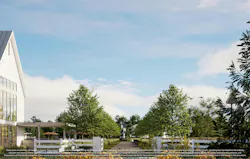
Planned in 10 phases across a 15-year build-out, The Granary will ultimately feature 1,350 homes, 60,000 square feet of commercial space, 10 acres of preserved open space, and 55 acres of parks. A layered amenity program will focus on enhancing well-being, creating an overall experience that encourages and enables a sense of connection with the outdoors, the self, and one another.
Convergence Communities will add to that ambition with Dark Sky principles to improve rest and relaxation, says the fi rm’s founder and president Colby Cox, which will benefit not only Granary residents, but also the community at large.
Pro Builder: How did the idea for The Granary come about?
Colby Cox: The land itself has actually been in my family for a long time, close to 100 years. It’s a property I’ve known my whole life.
This project is somewhat diff erent from what we typically do and is the first property that’s been a family asset that I’ve personally developed. When the property went to my mother, she approached me about developing it. That was probably six or seven years ago.
I’ve also developed other properties in this town before. One of them is still, I believe, the largest master-planned community in Milton, a 511-home project called Cannery Village that I developed beginning in 2001.
PB: How do you define conscious living?
CC: Conscious living is really just a fancy way of saying “living intentionally,” which means having an awareness of the things that bring joy and happiness in life. It’s modeled around a very strong belief system I have that connection to nature, connection to the self through introspection, and connection to other people are the three pillars that ultimately lead to human health and well-being. I wanted to create something to embody that belief.
So, conscious living for a new community is about creating an environment that not only allows for those things, but actively facilitates them and makes them easier.
PB: How will the concept of living consciously be integrated into The Granary?
CC: One tangible example is its connection to nature. We’ve preserved 20 acres of waterfront property on Diamond Pond within the town.
Throughout the community, there are pocket parks and open spaces within a three-to-five-minute walk of virtually every home. Whether it’s a park, natural area, or recreational field, there’s always accessible outdoor space nearby. All of these spaces are connected so residents can move throughout the community without needing a vehicle.
On a deeper level, the idea is that meaningful reflection naturally happens when people are connected to nature and to one another. Those experiences help quiet the noise of the outside world and allow people to develop a deeper connection to themselves and to the broader environment.
There are also specific features designed to encourage mindfulness and reflection, including mindfulness gardens, nature trails, artwork, and installations intended to create moments of stillness.
The entire community has been intentionally designed to encourage residents to get out of their homes, spend time outdoors, connect with others, and unplug from modern life.
PB: How is the amenity program focused on health and wellness?
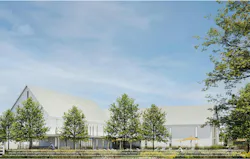
CC: The community will include a fitness center, multiple pools, pickleball courts, and an indoor gym. Everything is connected through walking trails, sidewalks, bike paths, and natural trail systems.
The property itself is divided by a road, so we’re building a pedestrian tunnel underneath it to connect both sides of the community, as well as connect the development to the town. There’s also an existing bike trail along the northern section of the property.
In terms of connecting people with one another, the community will feature multiple public gathering spaces and activations. There will be two public recreational fields designed for youth sports and club activities, a bouldering wall, a skate park, a concert venue, and an outdoor amphitheater.
PB: What specific Dark Sky principles will you implement?
CC: When we started the project, I didn’t realize there was actually an official Dark Sky certification process; we only found out about it as we explored the concept. The three main principles are directing lighting downward, carefully controlling brightness levels, and using appropriate lighting types. We haven’t necessarily planned to pursue formal certification, but we’ve implemented many of the same standards.
For example, all exterior lighting must be downward facing. We’ve established limits for brightness and lumen levels, and even the lighting used for recreational fields is designed to meet Dark Sky compliance standards.
Another major component is ensuring lights turn off when they’re not needed. Many of the streetlights and public-space lights are motion-sensitive, so they shut off when no one is around.
The overall goal is to create an environment where people can go outside on a summer evening, walk along a trail, and still clearly see the night sky without it being overwhelmed by artificial light.
PB: Why are these Dark Sky principles important to include?
CC: I live in Wyoming, in a small town where there’s very little light pollution. Outside of town, it’s completely dark, and the night sky is incredibly visible.
I’ve spent a lot of time thinking about how to recreate some of that experience at The Granary. This property sits adjacent to town, but before development it was essentially countryside. So the question became: how do we preserve that feeling and protect the experience of the natural environment even as the area develops?
About the Author
 Catherine Sweeney, Content Strategist/Staff Writer
Catherine Sweeney, Content Strategist/Staff Writer
Catherine Sweeney is a content strategist and staff writer for Pro Builder and Custom Builder Online, with a focus on design trends, new products, and environmental issues. Contact her at csweeney@endeavorb2b.com.