The ABCs of Concrete in Residential Construction
Key Takeaways
- The amount of concrete needs for a typical home can vary significantly depending on several factors, including scope and climate.
- The water-to-cement ratio of the concrete mix is critical: too much water can weaken the mix, while too little can make it unworkable.
- A stable, compacted sub-base is essential to support the slab and reduce cracking.

This article initially appeared in the November/December 2025 issue of Pro Builder
Concrete is the unsung hero of residential construction. From driveways and sidewalks to patios and, most importantly, foundations, it forms the literal base upon which homes are built.
In my role, I have the opportunity to assess home building practices across various regions of the country. While many builders are exploring alternatives to reduce concrete use and its environmental impact, the material remains essential in today’s housing production. Its strength, durability, and versatility is unmatched by many other building materials.
A clear understanding of concrete’s role, composition, and behavior leads to better building practices, longer-lasting structures, and fewer costly repairs down the line.

How Much Concrete?
The volume of concrete poured each year in single-family home construction is staggering—likely several million cubic yards annually. A typical 3,000-square-foot home may require anywhere from 40 to 50 cubic yards of concrete, depending on the foundation type and project scope, but can vary significantly depending on these factors:
- Size of the Home: Larger homes naturally require more concrete for foundations, garage slabs, porches, and exterior flatwork
- Type of Foundation: Slab-on-grade, crawl spaces, and full basements each require different volumes and configurations of concrete
- Geographic Location: Soil type, seismic activity, frost lines, and local building codes all influence how much concrete is needed and how it’s placed
- Additional Features: Patios, sidewalks, driveways, and decorative concrete add to the overall volume.

The ABCs of Concrete
To break it down further, let’s take a look at the “ABCs” of concrete in residential construction:
A: Aggregate and Ingredients
Concrete is composed of four main ingredients: cement, water, sand, and gravel (or crushed stone). These elements combine to form a strong, durable material when properly mixed and placed.
The water-to-cement ratio is critical: Too much water can weaken the mix, while too little can make it unworkable. Ready-mix concrete is commonly used on site for consistency and reliability to achieve an ideal compressive strength of 3,000-4,000 pounds per square inch (psi).
B: Base and Foundations
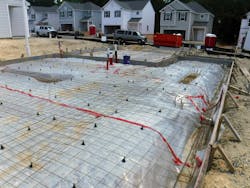
In most homes, the two most common foundation types are slab-on-grade and stem wall. A stable, compacted sub-base, usually 4-6 inches of granular fill, is essential to support the slab and reduce cracking.
Builders may also include a vapor barrier beneath the slab to prevent ground moisture intrusion. Reinforcing the concrete with steel rebar or welded wire mesh provides additional tensile strength and crack control.
C: Climate Considerations and Craftsmanship
Climate plays a critical role in how concrete performs, both during the pour and in the curing process. In cold regions, a concrete admixture of microscopic bubbles (also known as air-entrained) improves durability and workability and is often used to withstand freeze-thaw cycles and allow the concrete to dry (or cure) at an optimal pace.
In hot or dry climates, hydration—a chemical reaction that causes concrete to harden and gain strength—happens more quickly, which can lead to premature drying and unsightly cracking. In that case, your concrete trades must account for temperature, humidity, and wind when planning pours; timing and technique are critical to ensure a proper cure and long-term durability.
Best Practices for You and Your Trades
A successful concrete job begins with preparation: clean and stable forms, proper site grading, and accurate layouts. Consider these quality tips:
- Avoid adding excess water on site, which can compromise the mix.
- Control joints should be placed every 10–12 feet to help manage natural cracking.
- Curing should begin immediately using consistent surface water application (light spray), blankets, or curing compounds to retain moisture and develop strength through hydration.
In residential construction, the ABCs of concrete—ingredients, base, climate, and craftsmanship—are the keys to building homes that last generations.
About the Author
John Koenig
John Koenig drives quality and performance in home building as a building performance specialist on the PERFORM Builder Solutions team at IBACOS.