3 Design Tips for Today’s Diverse 55+ Market
Key Takeaways
- Not all 55+ home buyers and renters are the same; in fact, their wants and needs can be quite diverse
- Consider flexible-use spaces to accommodxate changing lfestyle needs and priorities
- Merchandising is critical to help 55+ buyers envision various space-use options
This article initially appeared in the November/December 2025 issue of Pro Builder
Consumers aged 55 and older make up 30% of the current U.S. population, and (coincidentally), 55% are current homeowners and 30% are renters1. This diverse group is living longer—just over 78 years on average—and their share of the labor force is the highest in decades for men and the highest levels ever for women2. They also have $113 trillion in net worth, or 73% of total net worth in the U.S.3.
All of this data adds up to a varied group of consumers who are looking for a range of features in their homes. And it’s not one size fits all, so best to avoid treating them as such.
Some people from this cohort need a smaller, more attainable home that they can afford on a fixed income, while others are moving down from a larger home … and downsizing for them is 3,000 square feet, not a typical starter home or apartment.
No matter the size or cost of their next home, 55+ consumers have a few key general features in mind, namely centered on entertaining, flexible-use spaces, and accommodating grandkids and pets.
1. Entertaining
Many homes designed for mature singles and couples offer space to entertain, whether it’s a formal dining room, a spacious great room, a generous kitchen, or even a wine tasting room.
But according to New Home Trends (NHTI) research, only 31% of this cohort say they enjoy hosting events and gatherings and that having adequate space to do so is important.4
That’s a solid percentage for builders and designers to consider, but it also means looking beyond simply providing a great room for entertaining.
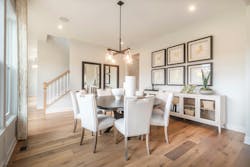
For those 55 and older who like to entertain, Miller & Smith created high-end detached homes at Birchwood at Brambleton in Ashburn, Va., with all the bells and whistles, including an elevator.
The 3,000+ square-foot plans put a big focus on entertaining, namely a formal dining room (pictured above), a nearby great room, and a gourmet kitchen.
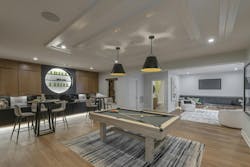
The home also includes the option to finish the lower level, with models merchandised as game rooms and lounges (see below).
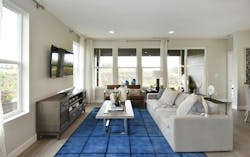
But not all homes for the 55+ crowd focus as much entertaining, and some don’t have the square footage to do so, like Trilogy at Tehale by Shea Homes in Bonney Lake, Wash.
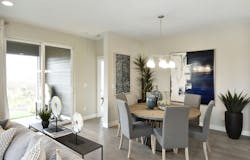
One of the model homes for this collection includes an open great room (pictured at the top of this article and below) that could work for the day-to-day life of a single person or a couple, but also supports modest gatherings.
This layout keeps it simple yet flexible with no wasted space.
2. Flexible-Use Spaces
If people are staying in the labor force longer, they are potentially telecommuting longer, so they need some established space in their home to work.
Your plans could include a niche somewhere, or a dedicated office that could one day flex into something else to support hobbies or accommodate overnight guests.

At just under 100 square feet, this den/hobby space (at left)) in the Dreamsicle model at the Conch Cottages by Minto Communities in Daytona Beach, Fla., can be slightly smaller than a typical secondary bedroom to allocate square footage elsewhere in the plan, such as the great room or primary suite.
The design team thoughtfully merchandised the room as a multifunctional space that can be an office part of the time—a break from the party lifestyle of this Margaritaville-branded community.
If the resident is retired or doesn’t work in the home, the flex space could support other uses like an art studio or library.
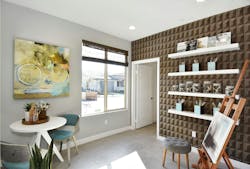
AI Design beautifully merchandised flex spaces in the models at Vita at Altis by Tri Pointe Homes in Beaumont, Calif., including this art studio (see below). Creative merchandising can create memory points that draw buyers back to you in a competitive market.
3. Grandkids and Pets
Proximity to extended family is critical for some people in this group. Not only do they want to live near their kids and/or grandkids, but would consider moving to do so.
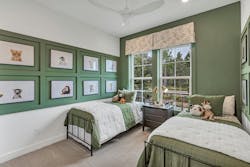
One of the models for the Meadow Collection within Reverie at Trailmark by Dream Finders Homes in St. Augustine, Fla., includes a suite at the front of the home merchandised for visiting grandkids (see above and below), a great way for 55+ buyers to envision that scenario.
But what if a 55+ couple or single person didn't have children, or the kids have long since left the nest?
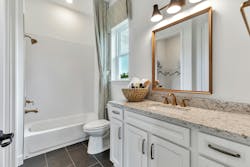
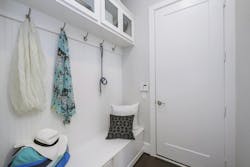
Enter pets, which increasingly require more square footage to accommodate built-in water bowls with their own pot filler, a pet wash in the laundry room, and pest-specific storage in the mud room.

The model for the Cottage Collection by Darling Homes at Bonterra at Cross Creek Ranch in Fulshear, Texas, includes many of these features in multiple spaces (see above and below).
Each of these examples highlighted just how diverse and eclectic this group is. Dive into what your local 55+ buyers want and need to help determine what kind and sizes of homes to build, as well as key features that will help or hinder the sale.
Footnotes:
1 John Burns Research and Consulting, LLC tabulations of US Census Bureau 2023 American Community Survey 1-Year Estimates
2 John Burns Research and Consulting, LLC tabulations of Bureau of Labor Statistics data
3 John Burns Research and Consulting, LLC tabulations of Federal Reserve Bank data
4 New Home Trends Institute by John Burns Research & Consulting, LLC January 2024 survey of 662 respondents age 55+
About the Author
 Jenni Nichols
Jenni Nichols
Jenni Nichols is VP of Design for the New Home Trends Institute at John Burns Research & Consulting. She scouts and analyzes the best housing collections and master planned communities from across the country to feature in the DesignLens database and serves as chair of NHTI’s Housing Design Trends council. Along with supporting clients with their design and trends inquiries, she also consults with developers and builders planning their communities and fine-tuning their home designs. Email her at jnichols@jbrec.com or visit newhometrendsinstitute.com.