This article initially appeared in the January/February 2026 issue of Pro Builder
While getting outdoors is ideal, it’s not always possible in colder months and colder climes due to work schedules or weather.
But applying biophilic design can help make that connection. Based on the concept of biophilia—that humans have an innate need to interact with natural systems to feel healthy and well‚ it's an approach to architecture and interior design that intentionally connects people with nature in the built environment
Instead of separating buildings from nature, biophilic design brings nature in or keeps people visually, physically, or psychologically connected to it, typically with windows or glass, materials and color, and year-round outdoor spaces.
Windows
Windows are a great way to bring the outdoors in. They provide views and a connection to the outdoors when open while bringing natural light into the home.
The challenges with windows in production housing are privacy and cost. Builders cannot just include oversized windows throughout the home without a dramatic price tag, compromised privacy between neighbors, or perhaps sacrificing energy efficiency.
Creative solutions bring in natural light while keeping costs reasonable and preserving privacy.
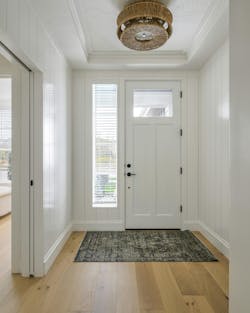
Interior foyers can feel dark, but at Creekside at Cartwright Ranch in Boise, Idaho, Brighton Homes' design team used windows in and surrounding the front door to brighten the space (above).
This window placement is appealing from the front stoop as well as from the interior of the home. The window placement and semi-defined foyer layout also mean neighbors aren’t looking directly into private interior spaces.
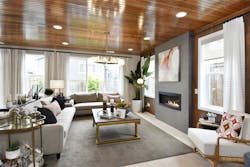
In the Seattle area, one of the key things people value in their homes is natural light. When the weather includes rain most of the year and sometimes even ice storms in the winter, residents long to connect with the outdoors.
At Canterbury Park in Sammamish, Wash., Toll Brothers bordered the Great Room (above) with oversized windows that bring the light in as well as offer views to the backyard. Who needs special lights to combat seasonal depression when you have this kind of access to natural light?
Materials and Color
If views aren't easily accessible, strategic choices of materials and color can still bring the outdoors in. Natural wood, greens, and rich textures are all opportunities for builders and interior designers to embrace biophilia in the home.
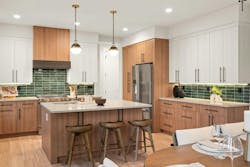
The kitchen in the model at the Bungalows at Blackwood Groves in Bozeman, Mont., (above) by Bridger Land Group from a design by KTGY is a perfect example of how material and color choices can embrace and evoke nature.
The selection of natural wood for the cabinetry includes a visible grain, along with the vibrant green tile backsplash bring the forest into the home, reminding residents of the nature surrounding them.
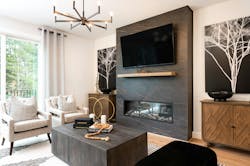
The design team for Solis at West Park in Ashburn, Va., took a different but just as effective approach to biophilic design in this model by Tri Pointe Homes.
The Great Room (above) includes a stone fireplace paired with wood accent cabinets. Black and white pictures of trees mirror those seen through the window, but in a modern aesthetic, border the fireplace.
This approach keeps with a neutral, modern color scheme while embracing nature through materials and even in the artwork.
Year-Round Outdoor Spaces
Sometimes you need the chance to go outdoors no matter the weather. A covered patio is often all you need, but an outdoor that provides some warmth and protection is ideal.
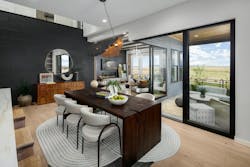
Infinity Properties and Woodley Architectural Group teamed up to design the homes for Fusion at Lyric in Lone Tree, Colo., to effectively and comfortably fuse the indoors and outdoors.
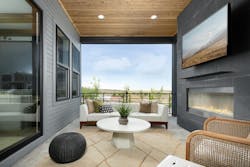
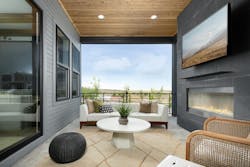
The corner-meet sliding glass door (a popular upgrade) creates an easy flow from the interior spaces to a covered outdoor room (above), while an optional fireplace in the outdoor room (below) props up a third wall to this outdoor space, blocking site lines between neighbors. The result is a cozy space to get outdoors even in the coldest months.
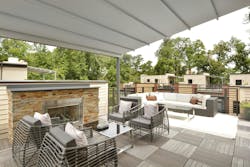
For the roof decks of townhomes at Grosvenor Heights in Bethesda, Md. (below), EYA and KTGY created spaces that enable year-round use.
Upgrades can include a gas fireplace, retractable awning, and wet bar, as seen here, delivering weather protection and warmth, not to mention the luxury of not having to go down to the kitchen for a refill.
Meanwhile, structured elements such as a fireplace and walls help to preserve the privacy between decks in this townhome community.
Biophilic design helps to literally brighten the dark days of winter. Think beyond sliding glass or bi-fold doors for a connection to nature and embrace other ways to bring nature into your homes. Not only is it appealing, but it also supports better mental health.
About the Author
 Jenni Nichols
Jenni Nichols
Jenni Nichols is VP of Design for the New Home Trends Institute at John Burns Research & Consulting. She scouts and analyzes the best housing collections and master planned communities from across the country to feature in the DesignLens database and serves as chair of NHTI’s Housing Design Trends council. Along with supporting clients with their design and trends inquiries, she also consults with developers and builders planning their communities and fine-tuning their home designs. Email her at jnichols@jbrec.com or visit newhometrendsinstitute.com.