Q+A: An Insider’s Guide to ADUs
Key Takeaways
- ADUs help increase housing density within existing neighborhoods to enable affordability and urban growth.
- Zoning laws in 18 states and Washington, DC, now allow ADUs "by right," streamlining the permitting and approvals processes.
- Converting existing structures can be more cost-effective and practical than new construction, especially when structural upgrades are manageable.
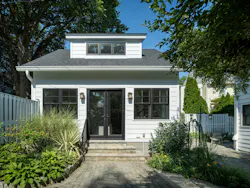
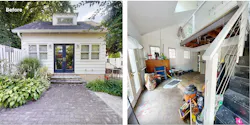
JP Ward, AIA, of Anthony Wilder Design/Build in Washington, DC, served as the lead architect for a recently converted storage garage built in 1922 into a modern accessory dwelling unit (ADU) that will serve as a guest house, complete with full bath and kitchenette.
The project exemplifies the maturing consumer and political acceptance of these compact, independent living areas to boost local housing supply and address affordability challenges for both the owners of the primary home and both short- and long-term renters.

Pro Builder: How are Accessory Dwelling Units (ADUs) helping to fill the gap in “missing middle” housing, and what does that mean for urban density and affordability?
JP Ward: ADUs can address housing supply by adding units in single-family zones, boosting supply. They increase density subtly, maintaining neighborhood character, and enable affordability.
PB: How does financing work for ADUs?
JW: Most homeowners finance ADUs through a combination of personal savings and home equity, such as a home equity loan or line of credit.
The approach can vary depending on factors, such as available equity in their primary residence, interest rate tolerance, whether the ADU is intended for rental income, and overall project scale.
In some cases, clients also evaluate projected rental income to help justify the investment, but financing structures are still typically tied to their primary home rather than the ADU itself.
PB: What are the zoning laws and permitting requirements surrounding ADUs?
JW: Currently, 18 states, including Maryland, New York, and Delaware, as well as Washington, DC, allow ADUs "by right" in single-family-zoned areas, streamlining the approvals process to build or remodel.
In these cases, there is no minimum lot size restrictions, and some municipalities approve projects within 60 days of submitting plans, surveys, energy reports, and fees for permit.
PB: Are there any size and structure limitations in terms of building an ADU?
JW: Typically, the maximum square footage is about 1,200, or less than 50% primary home’s footage.
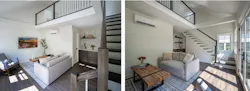
This particular conversion totaled approximately 450 square feet, with about 300 square feet on the main level and a 150 square foot loft above. The project stayed entirely within the original footprint of the existing structure.
PB: What is the step-by-step process for financing, designing, and building an ADU on a vacant lot?
JW: Our project took about eight months from design, permitting and construction to complete, but timelines can vary from 6-18 months, depending on feasibility (lot survey, zoning); the ability to secure financing; the design process (including utilities; permitting and approvals); site preparation (grading, utilities, foundation); the build itself; and in-process inspections and gaining a certificate of occupancy.
The most time intensive aspect of the project was upgrading the existing structure to meet modern performance expectations. Particularly reinforcing the exterior envelope and insulating it to support efficient heating and cooling.
We also expanded the dormer, which required reframing portions of the roof structure and added complexity to the build.
On the interior, a significant amount of time was dedicated to fit-and-finish work, including careful preparation, painting, and completing the bathroom and kitchenette.
There weren’t major surprises, but as with many adaptive reuse projects, working within an existing structure required more time and care than new construction—especially in aligning older framing with new systems and finishes.
PB: How does converting an existing structure to an ADU differ from a ground-up, new build in terms of structural upgrades, utility services, the approvals process, build time and scope, and/or financing?
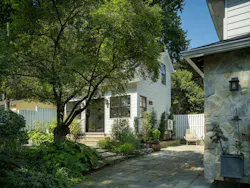
JW: Conversions like this one can avoid some zoning constraints like setbacks because the structure is already in place; however, they still typically require significant structural upgrades and new utility connections.
By contrast, a new ADU must fully comply with current zoning, including setbacks and lot coverage, and requires all-new foundation work and infrastructure—all of which adds cost and complexity.
While conversions aren’t always “cheap,” they often make more practical and financial sense than starting from the ground up, where structural and site-related costs are significantly higher.
PB: Do you envision more conversions of existing structures to ADUs, or more so new builds? Is there an inventory of conversion opportunities?
JW: I do think we’ll see continued interest in converting detached garages, as they can offer a more efficient and cost-effective path compared to new construction.
That said, I think the inventory of viable structures is limited. Many older detached buildings are in poor condition or have already been demolished. While new ADUs will continue to play a role, in many cases converting an existing structure is simply the more sensible approach when the opportunity exists.
JP Ward, AIA, is the director of business development at Anthony Wilder Design/Build in Cabin John, Md. A registered architect in Maryland, JP plays a multifaceted role that blends design excellence with strategic leadership. He collaborates with the firm’s team on custom residential projects—including new homes, whole-house interior and exterior renovations, and ADUs—while also overseeing project development, construction, and the company’s overall business development initiatives.
About the Author
 Rich Binsacca, Head of Content
Rich Binsacca, Head of Content
Rich Binsacca is Head of Content of Pro Builder and Custom Builder media brands. He has reported and written about all aspects of the housing industry since 1987 and most recently was editor-in-chief of Pro Builder Media. rbinsacca@endeavorb2b.com