Healthy Homes Summit Explores Housing as a Driver of Well-Being
Key Takeaways
- Homes can and should do more than provide shelter by actively supporting physical, mental, and social well-being
- Housing and health are inseparable, and capital aligned with community well-being can drive systemic change
- Some developers and builders are testing healthy homes at scale
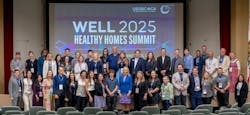
On September 18, 2025, the inaugural Healthy Homes Summit produced by the International WELL Building Institute (IWBI) convened a diverse cross-section of the residential industry, including developers, builders, designers, investors, technology innovators, and housing advocacy groups in Los Angeles.
There, homeowners and residents continue to grapple with the lasting aftermath of historic wildfires in January 2025, rebuilding homes, strengthening resilience, and seeking healthier living environments.
The gathering highlighted one central theme: homes can and should do more than shelter residents; they can actively support physical, mental, and social well-being.
Health at the Center of Home Building
The summit reflected a growing movement toward healthier housing standards.
Frameworks such as WELL for residential, launched in 2024, now guide the design and operations of thousands of homes worldwide.
By setting evidence-based strategies for air, water, comfort, and community, such tools give developers, builders and operators a roadmap for making health strategies a built-in feature rather than an optional add-on.
Liz Miles, IWBI vice president of residential, lauded the industry trailblazers from more than 20 countries have already embraced the new WELL for residential standard to design, build and operate more healthy and resilient homes.
“The pilot program has shown that healthy homes are not just aspirational, but more importantly, they are achievable and scalable,” says Miles. “These early adopters are proving that health strategies can transform residential communities worldwide.”
“We spend so much of our lives in buildings, yet we don’t talk enough about health,” added Ben Stapleton, executive director of California chapter of the U.S. Green Building Council (USGBC), which co-organized the event. “Homes should be safe, supportive, and connected places, requiring both design intention and cross-industry collaboration.”

From Profit to Purpose in Residential Investment
One summit panel explored how capital is reshaping the role of wellness in housing.
Deyl Kearin of DLP Capital and Kimberly Brown of Housing Impact Partners described a shift from extractive investment models toward ones that generate both financial returns and measurable community benefit.
“When we take care of our tenants and activate programs, it’s additive to our bottom line,” said Kearin, pointing to DLP’s Thriving Communities framework that integrates housing with health, nutrition, and financial literacy programs.
Brown emphasized serving vulnerable populations in Los Angeles through affordable housing and wraparound services.
Their message was clear: housing is inseparable from health, and capital aligned with community well-being can drive systemic change.
Designing Homes for Every Stage of Life
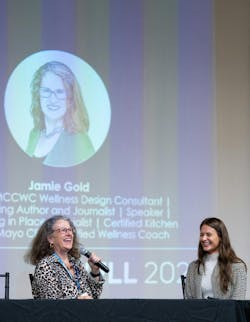
In a fireside chat during the summit, best-selling wellness design author Jamie Gold joined Miles to explore how homes can and must support people across generations.
Gold outlined five facets of wellness design including health, safety, resilience, accessibility, and joy, stressing that wellness is evidence-based, not decorative, and shared her own experience creating a “forever home,” complete with first-floor living and wildfire-prepared landscaping.
“Everyone deserves a safe, healthy place to live,” she says. “Awareness of air quality, water pollutants, and disaster preparedness is driving adoption, and as it becomes more popular, it becomes more affordable for all.”
Success Comes in Increments
Some community developers and home builders are already testing what healthy homes can look like at scale.
Some early adopters of the WELL standard start by applying those practices for a portion of their production homes to leverage lessons and experience learned before scaling across the community.
Builders say that market education is front and center in their engagement with their audiences.
Paul Barnes of Shea Homes described WELL strategies as a “North Star” for his 100-person team, while Nick Deacon of Johnson Development highlighted how “Wellness Zones” from gardens and nature paths to plazas designed for connection are reshaping communities.
Both Barnes and Deacon emphasized affordability, showing how strategies such as inclusionary housing and supplier partnerships can integrate wellness features without pricing people out.
Technology with a Human Focus
A session on innovation underscored that healthy homes are not about flashy gadgets, but about solutions that meet real needs. Technologies can play a pivotal role to bring health, resilience and equity all together, such as:
- Lighting: Carson Alsop, experience leader at Lutron Electronics, described how adaptive lighting supported her brother-in-law during cancer treatment and reduced sundowning symptoms in dementia care.
- Comfort: Kenley Kyle, electrification innovator for Trane Technologies, explained how advanced HVAC zoning allows personalization while saving energy, making comfort a wellness issue as much as a technical one.
- Air Quality and Equity: Aeroseal’s VP Trisha Miller highlighted how duct-sealing can cut leakage by up to 30%, and how new funding streams are bringing upgrades to manufactured housing communities
“Healthy home technologies are most powerful when they’re designed in from the start, not bolted on at the end,” added moderator Whitney Austin Gray, VP of research at IWBI.

A Global Movement
The Healthy Homes Summit concluded with a presentation of global case studies and a plaque ceremony honoring early adopters of the WELL for Residential standard who achieved WELL residence status.
Demand for healthy housing is rising worldwide, spurred by the pandemic and growing public awareness, but most homes are still not designed with health at the center.
According to the World Health Organization, one in four people live in conditions that harm their health, safety, and well-being.
The Healthy Homes Summit represents a crucial step toward addressing the urgent global need for homes that truly support human health.
About the Author
 Yan Tai
Yan Tai
Yan Tai is the senior VP of communications at the International WELL Building Institute. She has broad experience in communications and marketing especially in real estate, sustainability, and financial services.