Silver Stars: Recipients of the 2026 National Housing Quality Awards

This article initially appeared in the January/February 2026 issue of Pro Builder
Brown Haven Homes
Four years ago, Brown Haven Homes wanted to challenge itself to improve how it managed the business and served clientele, so it launched an initiative to prepare for an NHQA application.
“We invested heavily in data, starting with software, to rigidly track cycle time and variance,” says John Allen, CEO and founder of the Georgia-based home builder operating in four states.
The company also bolstered ties with area trades by focusing on those that bought into the builder’s quality standards and nurturing them to be partners, not just subcontractors.
“We wanted to ensure that we were getting the best possible people in our area and that they were trained properly,” he says.

Preparation Pays Off
In 2025, a better prepared Brown Haven entered its most mature division, based in Ellijay, Ga., as an NHQA candidate. The work paid off as the company earned a Silver award, an impressive accomplishment for its first swing at the prize.
Though the NHQA examiners focused on the Ellijay division, their evaluation bled into other parts of the company. Allen was struck by the breadth of the examination that gave him plenty of fodder for improvements across the entire operation.
“I was blown away by how thorough the judges were and how deeply they got inside of the business,” he says.
Growing Strong
One of the key takeaways was how, in certain areas, Brown Haven is dependent on superstar-caliber individuals.
“We have some work to do on becoming more of a process-driven organization and less reliant on key individual contributors,” Allen says of the company’s top managerial priority as it targets an ambitious goal of closing 1,000 homes annually by 2030, nearly four times its 2025 projection of 275.
Historically, Brown Haven has exclusively served as an on-your-lot builder, but the company’s biggest opportunity for growth is a new division that will build full communities on property that it buys and develops.
“We are building out the team to get that new department off the ground,” Allen says.
Setting High Standards
While growth is a key driver, Allen stresses that it will not come at the expense of quality, and he continues to hold the company to high standards. He looks to customer satisfaction leaders across all industries, not just homebuilding, as benchmarks.
“We want to be as good as Apple,” he says. That means aspiring to the tech giant’s enviable 70-point net promoter score (NPS), a popular measure of customer willingness to recommend the company to a friend.
“To get to a thousand annual closings but have quality slip or have unhappy clients is not the goal,” Allen says. “If we’re not getting better, we’ll slow growth until the operation catches up.”
Brown Haven recently converted its customer survey process from paper-based to digital, which will help it better track quality and customer satisfaction performance trends—an area NHQA examiners cited for improvement.
“The old paper-based process just wasn’t mature enough to give us a broad dataset to provide absolute clarity on quality,” Allen says. Given more time, he anticipates the new process will offer insights the company needs to achieve quality goals.

Culture Shift
A vital step is to upgrade onboarding and training of new personnel. “First you have to obsess on your people, and if you take care of them, they will take care of your clients and create raving fans,” Allen says.
The company aims to reduce the time it takes for a new hire to become 80% proficient in their new role, from about six to eight months now to 60 to 90 days. A new team focused exclusively on training will create a less subjective regimen and require new hires to pass tests and accomplish milestones, Allen says.
The company also will promote a culture that prompts leaders to upgrade their skills. For example, organization-wide virtual meetings include a segment where individuals cite a podcast or a book regarding business management or personal development.
“Personal development is not voluntary; it’s mandated,” Allen says. “That’s one of the things you have to get on board with here. We want it to be kind of hard to be part of the organization.”
Allen is putting together a team of two or three managers to focus on the recommendations in the NHQA Feedback Report with intention toward a future NHQA application.
“We can’t do all of it at once, but we’ll have initiatives that chip away at the recommendations every quarter before we apply again and be in position to earn Gold.”
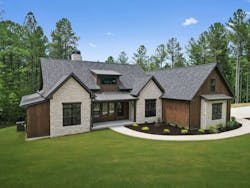
Specs: Brown Haven Homes (Ellijay), Hiawassee, Ga.
Founded: 2005
Markets: Georgia, The Carolinas, and Tennessee
Housing Types: Single-family spec
2024 revenue: $120 million
2024 closings: 195
Strengths:
- Human Resources
- Leadership
- Customer Satisfaction
- Strategic Planning
Omega Builders
Founded 56 years ago, Omega Builders began a growth spurt in the early 2010s under second-generation ownership. As the company grew, it worked on improving processes to become more efficient and responsive to customers in its central Texas market.
COO Ryan Waldron says the company saw the NHQA awards process as a catalyst for further business process enhancement.
“I knew from all the research that I’ve done, reading the articles and watching the testimonials on YouTube from the other builders, that this was a pretty big undertaking,” he says. “We got to the point where we felt the company was hitting on all cylinders and it was time to look for the next hurdle for improvement.”
The NHQA experience delivered as expected. “It forced us to look at every aspect of the business and question things, and we started to see areas where we can improve based off the questions and judges’ feedback,” Waldron says.
The builder achieved remarkable consistency across all sections of the NHQA evaluation, scoring at or slightly above the Silver award baseline in six categories and just a hair below that standard in two others. Waldron attributes that performance to the company’s process discipline.
“We have the dedication to make sure that our processes are accurate and that they are followed,” he says, adding that every aspect of the business has a documented process associated with it. “Every employee understands that following them will deliver the results we’re going for.”

Taking Next Steps
Omega has already applied recommendations from the extensive NHQA Feedback Report by adopting an entrepreneurial operating system (EOS). Based on the book, “What the Heck is EOS?” by Gino Wickman, this methodology provides a framework for setting goals and monitoring progress quarterly through a series of measurable metrics.
“That was one of the suggestions by the examiners, and we’re looking to implement it as part of our management strategy,” Waldron says. The company is planning to hire consultants to help guide that effort early this year.
Another area ripe for improvement for Omega is jobsite safety. The judges recommended that the builder develop measures to ensure safety standards are implemented and adhered to consistently and “develop a system to capture, document, track, and measure progress to eliminate construction defects or safety issues.”
“Contractually, our trade partners are responsible for the safety of their employees,” Waldron says, but admits that the company has an important role to play in that realm. To monitor trades’ efforts and offer feedback, the builder conducts weekly safety inspections and tracks results in a central database.
“We’re going to implement a much more stringent safety program, and we are going to put in place things to incentivize our trade partners to follow our quality inspections as well,” Waldron says. The company will focus on positive reinforcement of safety practices rather than take a punitive approach; for example, a new awards program will recognize trades who excel at jobsite safety.
Continuous Improvement
Waldron says the company can bolster construction quality (which, except for the jobsite safety aspect, received high scores) by sharing more information with its trade partners, namely customer satisfaction scores.
“We can implement our mission and vision more closely with our trade partners by doing that,” he says.
Customer satisfaction—the NHQA category that received the highest score—has been paramount since the company’s founding, and that beacon permeates the organization.
“We err on the side of the customer, so we are not going to be hardline on certain aspects of a warranty or something involving the billing process with a customer,” Waldron says. The company empowers frontline employees to make things right when customers have a complaint, he adds.
Omega also constantly evaluates its performance from the customer perspective, conducting meetings with stakeholders to go over every single review and discuss comments individual scores.
The NHQA process was exhaustive, involving most of the organization’s managers, but the intensive work was worthwhile.
“I absolutely would recommend other builders go through the process,” says Waldron. “For a company that wants to improve to be evaluated by people who have been in your shoes and have gone to the highest level, it’s only going to make your business better.”

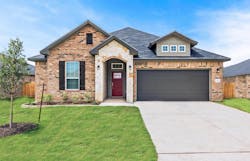
Specs: Omega Builders, Temple, Texas
Founded 1969
Markets: Central Texas
Housing Types: Single-family spec
2024 revenue: $98.1 million
2024 closings: 281
Strengths:
- Customer Satisfaction
- Leadership
- Process Management
Stone Martin Builders
Based on what Stone Martin Builders learned from earning an NHQ Bronze award for 2024, and the steps the company took to improve from the results of that effort, its leadership team was confident of scoring much higher when it engaged the program again.
“We thought we had it all figured out (this time around),” says Adam Middleton, the company’s director of innovation. “We knew we had some room for improvement, but we felt extremely confident in everything we were doing.”
That confidence was partially justified, as the NHQA examination team gave positive feedback on the company’s accomplishments since its first foray, namely in the areas of leadership, process management, customer satisfaction, and human resources—all of which scored at an industry-leading Gold level of accomplishment.

Redoubling Efforts
What brought the company back to its Silver-level award were lower scores for strategic planning and construction quality, which Middleton and others on the team will eagerly take to heart.
For example, they are redoubling efforts to crack the strategic planning code. The company made strides in that area since 2024, but the judges’ constructive criticism this year was “an eye-opener,” Middleton says. “We felt that was one of our biggest areas of improvement from the previous application, but we also realized we had some blind spots.”
Specifically, the builder improved how it conducted strategic planning among the core leadership group, but needed to do a better job of involving others.
For instance, with a goal of diversifying its revenue streams by launching new ventures, including title companies, mortgage lending joint ventures, and a build-on-your-own-lot division, the builder neglected to adequately consider how these initiatives would impact departments across its operations.
“We needed to do a much better job of being able to convey the core initiative, where we’re going to set up these different entities, and the impact downstream for everybody,’” says COO John Manasco.
To improve buy-in of strategic goals across the organization, the company also revamped its planning process.
“It was kind of ad-hoc before,” Manasco says. “We now have a more formalized structure in meetings and conversations.”
And, importantly, a larger group of participants in strategic planning meetings, which has led to more widely shared ownership of big-picture goals. Department heads now more readily help guide new initiatives and more easily get behind organizational course changes.
Engaging Employees
The current business environment makes widespread buy-in across the organization more important than ever, Manasco says. A weakening economic picture is amplifying market volatility. Buyers’ confidence is shaky, and that impacts employees.
“Employees have to be confident that what they’re doing will yield better times for the company, otherwise you just wind up running into burnout and change fatigue,” Manasco says.
The company also made great progress in the past couple of years to update staff on progress toward stated goals. Making measurable key performance metric (KPIs) public across the company gave it a clear line of sight on cycle times, profit margin slippage, and average number of warranty claims on a closed home.
Also, homeowner surveys at closing, within 30 days, and at one year were not widely shared, but providing those numbers now to all staff has “made a massive difference as far as how people feel about the work they are doing and the pride that they have in it,” Middleton says.
The NHQA examiners also cited the company’s impressive progress in human resources (HR) operations. That success was largely due to consolidating all HR data, including benefits and payroll, under a single platform,
“Before, it was different applications for different things,” Manasco says. “Now everything is accessible from one interface.”
Initiating AI
In 2025, Stone Martin also launched a key initiative to use artificial intelligence (AI) to help streamline decision-making. “We’ve spent almost a year getting a lot of documentation in place in a structured manner to be AI-ready,” Manasco says.
This year, the company expects that effort to bear fruit, first as an in-house agent to help staff get answers about employee benefits and career paths, then using the technology to gain real-time insights on financial reports, scheduling, and operational efficiencies.
Given all the areas in which Stone Martin improved from its first NHQA experience to its latest—across all eight categories but especially the four that breached the Gold standard—Manasco is an enthusiastic advocate of the program.
“A lot of people spend a lot of dollars bringing in consultants, trying all these different things to gauge their operational efficiencies and health as a company, but this one program does an amazing job of that,” he says.
“It’s not a battle against another builder, but a gauge against a set of standards that should be in place for the entire industry. It would make us all better if more builders did it.”

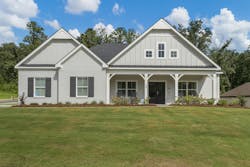
Specs: Stone Martin Builders, Opelika, Ala.
Founded 2007
Markets: Alabama and Georgia
Housing Types: Single-family spec and on-your-lot
2024 revenue: $341.6 million
2024 closings: 806
Strengths:
- Customer Satisfaction
- Process Management
- Human Resources
- Leadership
Windsong Properties
Having earned NHQA Bronze for 2023, Windsong Properties had an extensive benchmarking reference when it reengaged the program for 2026.
“It was interesting to read the initial application and compare it to where we are today and recognize the progress we’ve made,” says Jeffrey Abraham, Windsong’s CFO.
In the interim, Windsong underwent several changes within its key management team, seeking new blood to evolve into a more stable and sustainable operation with opportunities to grow.
“We had always been a small, entrepreneurial company with very little turnover and didn’t have a lot of outside input,” Abraham says. “We were not having a flow of new ideas coming in, and really nothing from the perspective of a larger, more professionally run company.”
New perspectives from new leaders arrived at just the right time. “The market is changing pretty significantly,” Abraham says. “Making data-driven decisions, having a process in place to evaluate where we are with our trades, with our customers, with our market, and the product, has become critically important.”

Data-Driven Decisions
The most notable improvement since the builder’s first NHQA foray was a better use of data for making strategic and tactical decisions, Abraham says. The upgrades helped the company step up to NHQA Silver this year.
Windsong also is establishing methodologies and processes to use new analytical tools “that will allow us to make quicker, more accurate decisions in real time,” he says, as well as a newly created position with financial planning and forecasting expertise.
“We are starting to see this person work with each of our department heads to connect the dots between what they’re doing with decision-making inside of their departments in the context of our strategic plan and our annual operating budget,” says owner and CEO Mark Carruth. “He will provide forecasting reports so we can glimpse the future and see where we might be headed, giving us a chance to adjust tactically if conditions are changing.”
Digging Deeper into the Market
Windsong’s markets in the north Atlanta area are consolidating, with large national companies becoming more prominent, creating pressure to remain competitive and profitable.
“You have to find areas for advantage to deliver quality products and experiences and create internal efficiencies to drive your costs down,” Abraham says.
“The area most difficult to manage in this type of environment is our land position,” adds Carruth. Adjusting the acreage of land holdings while operating the business during a declining market requires diligent assessment of the latest and most relevant internal and external data, he adds.
Over the past few months, the company has implemented a new process to take the pulse of its market, allowing it to dig into the activities of its competitors, where they’re finding successes, and understanding better what buyers are looking for in a house, their price points, and their affordability.

Room for Improvement
While Windsong earned high marks from NHQA examiners for its customer satisfaction acumen and results two years ago—and improvements since that elevated that category to Gold-level performance this time around—there were still areas in that realm ripe for the tweaking.
For instance, customer satisfaction scores were at industry-leading levels at closing, but slipped around the 45-day mark.
“We realized the relationship through the sales and billing process was very intensive and highly engaging with the customers, and then there was a gap of about 45 days with no contact,” Carruth says.
To remedy that deficiency, the company hired a new customer service and warranty manager who began calling customers within the first two weeks of occupancy.
“Once she started reaching out and following up with her good communication style, we saw those results go up,” Carruth says. “That’s a good example of driving decisions with data.”
Customer satisfaction scores are now “unprecedented” in some instances, he says. In 2024, Windsong’s cycle time to clear warranty items was about 30 days, but it has slashed that time to about 10 to 11 days.
Although Windsong also improved in the areas of leadership, process management, construction quality, trade relationships, and strategic planning from its previous NHQA experience, Carruth knows there still is a long way to go.
“Integration of strategic planning into our day-to-day operations is still limited and needs to be more robust and thoughtful,” he says. The company also aims to better use its strong ties with trade partners to improve overall operations.
“We will do this again,” Carruth says of the NHQA application and evaluation process. “It will be an every two- or three-year exercise even after we get to the highest level (Gold) because you can always get better.”

Specs: Windsong Properties, Woodstock, Ga.
Founded: 2003
Markets: Atlanta metro
Housing Types: Single-family spec
2024 revenue: $49.26 million
2024 closings: 91
Strengths:
- Customer Satisfaction
- Leadership
- Strategic Planning
What is NHQA?
Founded in 1993, The National Housing Quality Award (NHQA) seeks to both improve and recognize operational excellence in home building.
Based on the Malcolm Baldrige Awards, the process includes an extensive questionnaire and examination. Builders are evaluated by a team of past NHQA Gold recipients and well-established industry consultants across 8 operational categories and 33 subcategories scored on a 1-5 scale, where 5 represents industry-leading performance.
Applicants can earn Gold, Silver, Bronze, or Honorable Mention recognition. While an award is not guaranteed, all applicants receive a comprehensive Feedback Report with their scores, kudos for excellence and effort, and recommendations for improvement.
Applications for the next program year are currently open through March 20, 2026 at probuilder.com/nhqa.

About the Author
Peter Fabris
Peter Fabris is a Boston-based freelance writer with decades of experience covering housing and related industries.