7 Things to Know as the New-Home Market Finds its Footing
Key Takeaways
- Product relevance is proving to be more effective than traditiomal financial incentives to spur home sales
- New communities isolated from established infrastructure are losing favor to those with services within walking distance
- Technology is enabling faster new-home production without sacrificing quality
- Wellness is the new buzzword in housing ... and it's here to stay
- Regluatory barriers are easing as builders and policymakers alike increasingly agree on the need for workforce housing

Now that we’re settling into 2026, conversations about where the industry is headed are already shifting.
After years of volatility, builders have tested nearly every approach, from incentives and rate buydowns to value engineering, compressed schedules, and alternative delivery methods.
What’s becoming clear is that the next phase of the cycle won’t be defined by any single fix. Instead, it will reward those who are rethinking relevance, performance, and long-term function.
Across development, construction, and building science, leaders are seeing the same pattern emerge: the playbook is changing. Not in theory, but in practice.
Here’s what that reset looks like on the ground.
1. Product Relevance Matters More Than Financial Incentives
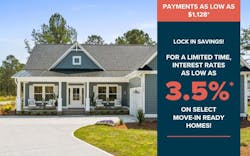
For much of the past cycle, affordability conversations centered on financing tools. In 2026, many experts are recognizing the limits of that approach.

“In 2026, I think the industry will finally admit that interest rate buydowns aren’t what’s holding buyers back,” says Rachel Bardis (at left), COO of Somers West, a developer based in Sacramento, Calif. “We’ve tried every financial lever available, and it’s not moving demand the way it used to. That tells me the issue isn’t affordability alone, it’s relevance. Buyers are being asked to stretch for homes that don’t actually make daily life easier.”
This reframing matters. When incentives stop delivering results, the problem isn’t just the market, but the product-market fit. Floor plans, locations, amenities, and community design are all being re-evaluated through a more pragmatic lens. Builders should ask themselves, “Does this home actually reduce friction in everyday life?”
According to the latest data from the America at Home Study (AAHS), a wide-reaching effort to gauge consumer preferences during and after the pandemic, 30% of respondents say the housing market isn’t meeting their needs, and a similar percentage feel less confident making housing decisions today compared to previous years. Even as demand remains high, uncertainty is as well.
The stakes have risen for builders to deliver products that are not only affordable, but personally relevant and emotionally reassuring.
From a macro perspective, demand fundamentals are still closely tied to employment trends.

“Employment growth drives household formation in a near one-to-one relationship, which is what ultimately creates demand for housing,” says Don Neff (at right), president of LJP Construction Services, a building quality consultant with offices in California and Florida.
“While we expect U.S. real estate markets to strengthen later in the year as interest rates and inflation continue to trend downward, we’re also watching slowing job growth nationally, which makes product relevance even more important in the near term.”
2. Isolation Is the New Risk in Suburban Development
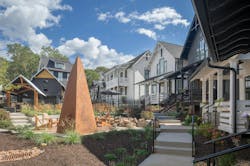
Density has long dominated planning debates, but many builders are realizing that isolation from sprawl development is becoming a serious liability.
“Traditional subdivisions that require a car trip for every errand are increasingly out of sync with how people live, work, and age,” Bardis says. “The biggest risk I see in 2026 isn’t density, but isolation. As convenience and connection are becoming core value drivers.”
This isn’t an ideological argument. Communities that function poorly, regardless of how attractive they look on paper, are losing potential. Metrics that once felt abstract like walkability usage, resident engagement, and daily activity patterns are increasingly tied to land value, buyer loyalty, and long-term absorption.

“We’re entering an era where communities will be evaluated less by renderings and more by lived performance,” says Mike Miller (at left), EVP of real estate and community development at Red Oak Development Group, based in Austin, Texas. “The question won’t be ‘How fast did it sell?’ but ‘How well does it function?’”
3. Amenities Are Being Replaced by Infrastructure
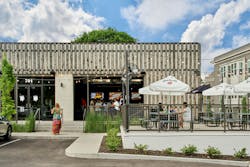
One of the clearest signals of this shift is how amenity strategies are evolving.
“I think we can expect a major pivot away from amenity strategies that prioritize spectacle over usefulness,” Bardis says.
Clubhouses and showpiece fitness centers won’t disappear, but they’ll stop being the headline, she says, replaced by daily-needs infrastructure such as food access, life services, mobility, and flexible workspaces, “That help save people time rather than just serving as a source of entertainment or leisure.”
In practice, this shift required developers and builders to rethink what counts as value.
“Placemaking is no longer about adding a park at the end of a plan,” Miller adds. “It’s the operating system of the community because it shapes how people move, gather, work, and belong.”
This evolution tracks with what consumers say they want. The latest AAHS study found that 49% of consumers pegged “walkability to coffee shops and casual eateries” is their most desired community amenity, surpassing trails (48%) for the first time in the study’s five-year history. Buyers are gravitating toward features that foster casual connection and real-life convenience.
As amenity strategies evolve, so does the question of who communities are designed to serve. For builders, this requires tighter coordination across land planning, programming, and operations, but the payoff is communities that sustain momentum long after initial sell-out.
4. Communities Must House the People Who Built Them
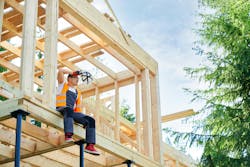
Another 2026 outlook gaining urgency is the role of workforce housing as a competitive strategy.
Neff notes that migration patterns are entering a new phase. “Over the last five years, migration was largely driven by tax policy, cost-of-living differences, and lifestyle factors,” he says.
Looking ahead, he expects regional labor rates and industrial location preferences to play a much larger role, particularly as reindustrialization efforts and new supply chain investments take shape across the country.
This approach aligns directly with how cities are evaluating new development to consider local workforce and financial implications. As migration patterns evolve based on labor, access to housing becomes inseparable from economic development.
“Workforce housing can’t exist as a supplementary category,” says Miller. “Developers who design pathways for essential workers to live in the communities they helped build and serve will attract stronger municipal partnerships, faster approvals, and deeper long-term demand.”
5. Delivery Speed and Building Science Will Define Winners

After years of supply chain disruptions, builders are prioritizing speed, but not at the expense of quality.

“We’ll see continued gains in construction velocity, driven in part by technological adoption and pressure to rein in costs,” says Brian Thomas (at right), president and COO of Trimjoist West, which supplies engineered floor joists.
According to U.S. Census Bureau data, a single-family home took an average of 7.7 months to complete in 2024, almost an entire month faster than in 2023. For homes built for sale, the cycle time was 6.3 months, the shortest time frame since 2021.
“Imagine what we’ll do in 2026?” Thomas says.
Advances in materials, structural systems, and workflow integration are enabling tighter schedules without sacrificing output quality. The builders who succeed in this environment are those who treat construction innovation as a strategic advantage rather than merely a cost-saving measure.
6. Wellness Moves Upstream in the Building Process

Wellness has been an industry buzzword for years, but it’s becoming something more solid and operational, evolving from lifestyle marketing to risk management, durability, and longevity.

“Wellness isn’t a finish-level conversation anymore, it’s a performance standard,” said Jillian Pritchard Cooke (at left), founder and CEO of Wellness Within Your Walls, a healthy home advocacy and certification organization. “Builders who control moisture, specify healthier materials, and reduce the conditions that allow mold and microbial growth will deliver fewer callbacks and a better living environment long after move-in.”
“Wellness isn’t a finish-level conversation anymore, it’s a performance standard,” said Jillian Pritchard Cooke, founder and CEO of Wellness Within Your Walls, a healthy home advocacy and certification organization. “Builders who control moisture, specify healthier materials, and reduce the conditions that allow mold and microbial growth will deliver fewer callbacks and a better living environment long after move-in.”
That mindset is reshaping how builders think about assemblies and envelopes.

“Wellness in housing is no longer defined by finishes or amenities alone,” added Colin House (at right), CEO of HydroBlok, makers of a water- and mold-resistant cement board.
Builders and developers are starting to recognize that moisture control, thermal consistency, and indoor air quality begin at the exterior envelope, he says. “Healthier buildings will be designed from the outside in, not layered on at the end.”
7. Regulation, Fees, and Entitlements Will Force Hard Choices

Many experts see this year as a turning point for regulatory realities.
“I think 2026 will be the year when fee structures and entitlement timelines stop being abstract policy conversations and start being recognized as a direct threat to housing delivery,” Bardis says. “The cumulative burden is no longer sustainable.”
At the same time, projects that align early with civic priorities are gaining traction.
“Civic alignment will matter as much as capital alignment,” Miller notes. “Communities aren’t just negotiating land use anymore. They’re evaluating whether a project actually advances their future.”
That means clearer points of view, earlier collaboration, and tougher decisions about what’s viable to deliver.
What the 2026 Reset Really Means
The issues we’re facing this year are becoming increasingly interconnected. Weaknesses in one can surface quickly in another.
Communities that struggle to function day-to-day are harder to entitle. Homes that fail to perform drive callbacks and long-term risk. Amenity-heavy plans without supporting infrastructure lose momentum after initial absorption.
The throughline across all of these conversations is about execution. In 2026, builders aren’t being rewarded simply for doing more, but for doing the right things – earlier, and with greater clarity.