4 Electrical System Trends for Housing in 2026
Key Takeaways
- Dynamic load management monitors total service demand in real time and automatically prioritizes loads
- Modular metering platforms are designed to scale without requiring a full replacement of the electrical service equipment
- Choosing the right breaker for an application is one of the simplest ways to keep warranty costs in check
- Integrating a smart‑energy platform directly into the home’s electrical panel builds digital intelligence into the core of the electrical system
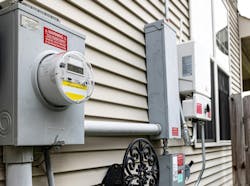
Residential construction is entering one of the most defining electrical transitions in decades. Homes built to outdated electrical standards increasingly struggle to support modern electrical loads, making what's behind the walls a priority for 2026 projects.
Nearly half of U.S. homes were built before 19801, long before residential-scale solar panels and arrays, electric vehicle (EV) charging, or heat pumps were part of housing’s vernacular, much less its mainstream.
But today, heat pump adoption and solar panels continue to rise, EV sales have passed the one-million-unit mark2 and appliances that were once fuelled by natural gas or propane are steadily shifting to electricity. Evolving building codes and state-level electrification policies are accelerating these changes, reshaping electrical demands in both new and existing homes.
While the National Electric Code (NEC) has not mandated universal EV readiness (that is, homes pre-wired or with an EV charger), many local jurisdictions already do – and more are expected to follow in 2026.
To navigate this landscape, builders need a design approach built on four practical pillars that address electrical capacity, construction labor constraints, safety, and rising homeowner expectations.
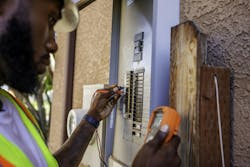
1. Dynamic Load Management
Many builders are asking the same question: how do you deliver a fully electrified, EV-ready home without jumping from a standard 200-amp service to a costly 400-amp upgrade?
In most homes, a 200-amp service was never designed to handle “stacked loads” of heat pumps, electric ranges and water heaters, and Level 2 EV charging all at once. When several of those products or systems operate simultaneously, the electrical backbone can exceed capacity, leading to nuisance circuit tripping or requiring a service upgrade.
Upgrading to 400 amps adds thousands of dollars to a project, extends permitting timelines, and often creates friction between builders, electricians, utilities, and homeowners.
Instead, more builders are turning to dynamic load management.
Dynamic load management is typically integrated at the main electrical panel, where it monitors total service demand in real time and automatically prioritizes loads. Rather than upsizing the service to handle rare peak conditions, the system allows critical equipment—like HVAC or heat pumps—to run uninterrupted by temporarily reducing or pausing lower‑priority loads such as EV charging.
For builders, the practical takeaways are:
- It’s widely available and proven, with years of use in EV‑ready and all‑electric homes.
- It can be retrofitted but is most cost‑effective when planned during new construction, where loads can be prioritized from day one.
- It’s far less expensive than a 400‑amp service upgrade, typically costing a few thousand dollars instead of triggering major utility work.
Fair warning: 400-amp panels may require longer lead times, as retailers or local distributors may not have them in stock.
Dynamic load management monitors demand in real time and automatically balance loads. When a high-priority system like a heat pump turns on, lower-priority loads such as EV charging are temporarily reduced or paused.
By managing when power is used, rather than increasing how much power is available, builders can deliver fully electrified, EV-ready homes on a 200-amp service, without blowing the budget ... or the circuit breakers.
2. Load Centers and Metering Platforms
With the persistent shortage of skilled labor for housing construction, every minute spent on the job site is critical. According to NAHB, more than half of builders report shortages of electricians, making electrical installation a recurring source of schedule pressure on both the builder and the trade partner3.
In that environment, traditional panel builds that require extensive custom wiring completed in the field can quickly become a strain on productivity. Builders increasingly need electrical systems that install faster, simplify wiring, and reduce on-site labor without compromising safety or reliability.
Modern engineered load centers and modular metering platforms deliver exactly that. Plug-on-neutral load centers reduce installation time by allowing breakers to snap directly onto the neutral bus, eliminating the manual trimming and stripping of wire to enable the neutral connection. The result is faster installs, cleaner panels, and fewer wiring errors
Likewise, modular metering platforms are designed to scale as a building grows, without requiring a full replacement of the electrical service equipment. Instead of a fixed, one‑size meter stack, these systems use meter sections that can be added vertically in the field—typically in 2‑ to 6‑meter increments—allowing capacity to expand as units are added or tenant needs change.
For builders and developers, this approach simplifies long‑term planning by supporting phased construction, future unit conversions, or tenant sub‑metering without costly service rework.
From a practical standpoint:
- They support growth over time, allowing additional metering sections to be installed as the building expands.
- They reduce upfront overbuild, since capacity can be added later instead of installed all at once.
- They simplify tenant metering, particularly in multi‑family and mixed‑use projects where flexibility is key.
- They’re field‑configurable, minimizing disruption when changes are needed after initial construction.

3. High-Performance Breakers
Ask any builder or electrician about the biggest post-handover to the homeowner pain point, and circuit tripping almost always comes up first.
With every new code cycle expanding AFCI and GFCI requirements, systems are safer—designed to detect arc faults and ground faults that can cause fires or shock—but often more sensitive.
That means a dishwasher or variable‑speed appliance can cause a false trip—an unintended breaker trip not caused by an actual overload or short circuit—leading to homeowner frustration and a costly callback for builders to evaluate why this may have happened.
Modern high‑performance breakers use more advanced sensing to distinguish harmless operational surges from real arc faults—dangerous, unintentional electrical arcing caused by damaged or deteriorated wiring—making it possible to meet NEC without compromising everyday comfort.
Choosing the right breaker for your application, taking into consideration the NEC, is one of the simplest ways to keep warranty costs in check.

4. Smart Energy as Standard
Homeowners today want insight into how their home uses energy. According to industry research, nearly half of homeowners say energy efficiency is a primary concern, and many see smart devices to manage usage and costs4. They also want homes that are adaptable or “future-proofed” for solar, battery storage, or other upgrades.
This expectation is no longer a premium feature. Building codes are also moving in this direction, increasingly encouraging (and in some states requiring) distributed energy readiness and easily accessible, clear load visibility. This can be delivered in multiple ways, from a mobile app to a centralized dashboard within a smart building management system.
Integrating a smart‑energy platform directly into the home’s electrical panel—meaning software and sensors that monitor and manage circuits in real time—builds digital intelligence into the core of the electrical system. It delivers real‑time, circuit‑level visibility through an intuitive app, giving homeowners the insight they need to understand usage patterns, change behavior, and potentially reduce energy costs.
In addition, builders benefit from a stronger differentiation in a competitive market, as new homes permitted in 2026 will require a proactive electrical design strategy.
By focusing on intelligent capacity management, modular installation, advanced protection, and built-in energy visibility, builders can deliver homes that are efficient to build, code-compliant from day one, and ready for the next generation of electrification.
Footnotes
[1] ET22SWE0057-Market-Study-of-Electric-Infrastructure-Upgrade-Alternatives-for-Electrification.pdf
[2] Tracking the Heat Pump & Water Heater Market in the United States - RMI
[3] Electric vehicles in the United States - statistics & facts | Statista
[4] The rise of smarter homes: harnessing AI for energy efficiency and resilience | Schneider Electric
About the Author
 Adam Mease
Adam Mease
Adam Mease is Business Line Leader for Energy Distribution NEMA (National Electrical Manufacturers Association) within ABB’s Smart Buildings division, where he focuses on how residential electrical systems must evolve to meet rising demand from electrification, EV charging, and energy-intensive home technologies.