Q+A with Bill Owens, 2026 NAHB Chairman of the Board
Key Highlights
- Owens aims to make NAHB more representative of the entire residential industry, including remodeling, trades, and suppliers through a multi-year strategic efforts, including governance evaluations and member engagement initiatives.
- Owens' grassroots experience and leadership roles have shaped his approach to serving members and addressing industry concerns.
- Key industry challenges include regulatory burdens, labor shortages, and supply chain issues, which impact housing affordability and supply.
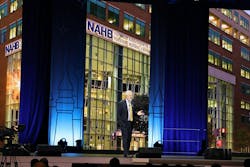
On Wednesday, February 18, the Board of Directors of the National Association of Home Builders (NAHB) elected Ohio-based remodeler Bill Owens as its 2026 chairman, a year-long volunteer position as the leader of the 140,000-member trade federation.
Owens’ path to the chairmanship was somewhat unconventional from his predecessors, not only as a remodeler, but also as a longtime instructor of continuing education and certification programs for members, and chairing a diverse array of councils, committees, and task forces.
We had the opportunity to sit down with him to share his vision for NAHB, his perspectives on the state of the residential building industry, and his hopes that members across all segments of housing understand and avail themselves to the tools and resources their association provides.
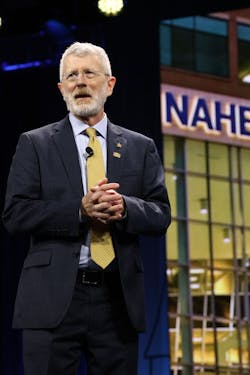
Pro Builder: What changes do you hope or want to make during your tenure as Chairman?
Bill Owens: I think there's a real willingness (among NAHB leadership) to make the association more representative of the broader residential industry.
What do we need to do in the next 16 years leading up to NAHB’s 100-year anniversary in 2042 is to better position ourselves and provide a value proposition that not only keeps and grows builder members, but also expands our membership.
I’m the first full-time remodeler to serve at this level, and I know NAHB views remodeling as a key sector. Extending that perspective to the trades, building products suppliers, title companies, banks, and others within our industry is the future of NAHB. We have to cast that broader net.
What do we need to do in the next 16 years leading up to NAHB’s 100-year anniversary in 2042 is to better position ourselves and provide a value proposition that not only keeps and grows builder members, but also expands our membership.
PB: That seems like a multi-year effort.
BO: We all know it’s multi-year process, and the three senior officers that will likely follow me are in unison. So, it’ll be an orchestrated relay from one to the other.
It will also take efforts like evaluating the bylaws and governance and membership models to set us up for success in the next 100 years.
And I know that many of our members are ready for this too. For example, here at IBS, the Leadership Council overwhelmingly approved a change to one of our bylaws that provides more flexibility in our committee structure to encourage more engagement among the members. So we’re excited to get started.
PB: You’ve been involved in and led many aspects of the federation. How much does that perspective build into your approach to serving as Chairman?
BO: I spent from the mid-90s up until COVID teaching classes and creating or revising coursework for NAHB and the Home Builders Institute (HBI). I was constantly in front of members and I always enjoy that sort of grassroots experience. It also improved my comfort level being in front of people and being a facilitator.
I also had the opportunity to serve as chairman at HBI and vice chairman at the Housing Innovation Research Labs. At NAHB, I chaired the Leading Suppliers Council, The New American Home and The New American Remodel Task Force, the Remodelers Council and the Construction Liability committee.
I was out there with members, learning their concerns and seeing what they're dealing with it, which formed my perspective and approach.
PB: What’s some of the best advice you’ve received in your career and time serving across the NAHB landscape?
BO: I had really good counseling from a former Remodelers Council chair back in the late nineties when I was thinking of running for that seat. And he advised me to make sure I have someone running the business at home while in a leadership role at NAHB.
So I hired my first general manager 10 or 15 years ago, which made it really easy for me to do more teaching and travel for NAHB. And then, the thing I should have done 20 years ago instead of two years ago was make my wife Betsy president of our Columbus (Ohio) operation, which is doing really well right now.
I will tell you the other reason I'm sitting right here today is my involvement in the 20 Club program. This is a peer networking and mentoring program, where members learn from each other about how to improve their operations and grow their business. If we hadn't joined a 20 Club, we would've never built the business to the point where I could even think about doing something like this. I'd still probably have nailbags on.
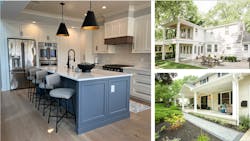
PB: I want to get outside the organization and talk about how you might describe the industry right now, just from your perspective as a remodeler from Worthington, Ohio.
BO: Uncertainty is a really good way to describe it. Regulations and housing policy is just death by a thousand cuts. There's not one thing in particular that’s driving up the price of housing, it's the cumulative effect of endless regulations that are adding a thousand dollars here and a thousand dollars there.
And maybe that doesn't sound like much, but every $1,000 increase in the cost of a median new home prices out nearly 116,000 potential buyers from the market.
We’re also grappling with a chronic labor shortage, supply chain issues, and other factors that limit the capacity of builders to build more homes.
If policymakers keep knocking us down at the knees, people will leave the industry. If this business gets too hard or the margins get so close, many may choose to get out. And this will just exacerbate the housing supply shortage because there just won’t be enough builders.
PB: Do you think housing has a seat at the table , and if not one now, how does it get one?
BO: Yes, I think we're doing as much as we can do to keep our housing priorities in front of policymakers, including our lobbying efforts on Capitol Hill and meetings with federal agencies and the White House.
Across the country, where I think we're making a difference, is training members to run for office at the local and county level.
NAHB also offers resources to help support advocacy and litigation efforts for our local associations and members through the State and Local Issues Fund and the Legal Action Fund.
We have a new brochure of 2025 advocacy victories that says very plainly what NAHB has done at the legal, regulatory, and legislative levels to help members’ businesses. I hope members and others check it out.
PB: Do you see municipalities coming to the table more in the spirit of cooperation?
BO: It certainly happens, but I don't think there's a groundswell yet. I think the biggest problem right now is that nimbyism is alive and well, either by vote or by referendum.
I think what any trade association should do is pretty simple: create an environment that offers tools, products, and services to support their members’ businesses and help them become more profitable and sustainable
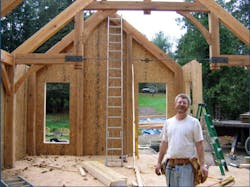
PB: Any last words, at least for now, before you embark on this journey as NAHB Chairman?
BO: I think what any trade association should do is pretty simple: create an environment that offers tools, products, and services to support their members’ businesses and help them become more profitable and sustainable. NAHB does just that. And I want to let more people in the industry know about all the benefits of membership.
Even if they don't engage in a 20 Club or attend IBS or get politically active, there is so much they will get from membership to support their business. NAHB provides the tools you need if you want to be profitable, sustainable, and mitigate risk.
About the Author
 Rich Binsacca, Head of Content
Rich Binsacca, Head of Content
Rich Binsacca is Head of Content of Pro Builder and Custom Builder media brands. He has reported and written about all aspects of the housing industry since 1987 and most recently was editor-in-chief of Pro Builder Media. rbinsacca@endeavorb2b.com