Key Highlights
- Post-WWII policies like the GI Bill successfully spurred a housing boom, economic growth, and middle-class expansion, serving as a model for today.
- Proposed solutions include personal housing savings accounts funded by tax dollars, aimed at reducing upfront costs and increasing homeownership opportunities.
- Restoring housing affordability is crucial to maintaining free enterprise and preventing economic disillusionment among working Americans.
The views expressed in this article are those of the author and not necessarily those of Pro Builder Media or EndeavorB2B.
This article also appeared in the September/October 2026 issue of Pro Builder.
Democratic socialism is a hot button in American politics. Its supporters argue that capitalism no longer serving millions of working Americans, while its opponents warn that it threatens an economic system that created unprecedented prosperity and opportunity.
But what if we’re arguing about the wrong thing? What if the attraction to democratic socialism is not primarily about ideology, but about affordability?
Most Americans aren’t studying competing economic theories; they are asking much simpler questions, such as whether they can afford their rent, pay their mortgage, home insurance, and property taxes, and ever save enough to purchase a home.
For millions of Americans, the answer to these questions are increasingly no.
Affordability Is the Pressure Point
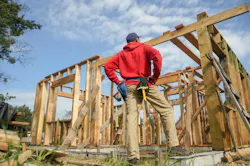
According to 2024 Census data analyzed by Harvard's Joint Center for Housing Studies, a record 22.7 million renter households spent more than 30% of their income on rent and utilities. Of those, 12.1 million spent more than half of their income simply keeping a roof over their heads.
Homeowners are under growing pressure as well: 20.7 million homeowner households were cost-burdened in 2024.
These are not necessarily people looking for a handout. Most are employed, raising families, and trying to be fiscally responsible.
But when the traditional doors to opportunity close, political promises begin to look like the only remaining entrance.
What happens when teachers, nurses, first responders, factory workers, and tradespeople can’t afford to live in the communities in which they work?
What happens when a family can afford a monthly mortgage payment but can’t save enough for a down payment and closing costs?
What happens when homeowners fear that the next home insurance increase, property-tax bill, major repair, or medical emergency could force them from the home they worked years to purchase and maintain?
Eventually, people stop asking how they can succeed within the economic system. They begin asking the government to replace it.
If affordability is the question (and the problem), shelter is at its core. America does not simply need another housing program, it needs another housing boom.
A Blast From the Past
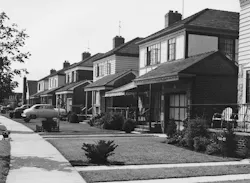
We have done it before. After World War II, millions of servicemembers returned to a country facing an enormous housing shortage. The U.S. responded with the GI Bill, which included federally guaranteed home loans issued through private lenders.
To be clear, the government did not give veterans free houses. It helped reduce or remove financial barriers that prevented qualified Americans from purchasing them.
By 1955, approximately 4.3 million home loans had been granted to veterans, with a total face value of $33 billion (about $411.2 billion today). The Department of Veterans Affairs (VA) reports that veterans using the program accounted for roughly 20% of the new homes built and occupied after the war at that point.
The impact extended far beyond the individual loans. The GI Bill helped create the confidence and purchasing power necessary to ignite private construction.
Banks made loans. Builders built homes. Manufacturers produced lumber, appliances, and building materials. Workers earned wages. Families purchased property and began building wealth. The result was over 20 million homes built in the 10 years following the end of the war.
The policy did not replace free enterprise. It unleashed it.
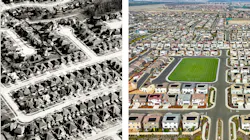
The broader postwar expansion was remarkable. The national homeownership rate rose from 43.6% in 1940 to 55% in 1950 to 62.1% by 1960, according to U.S. Census records (it peaked at 69.2% in 2004 and is currently at 65%).
A Housing Savings Approach
Consider this modern-day approach to housing supply and affordability, in which working Americans could redirect a portion of their federal income taxes into personal housing savings accounts?
Renters could use those accounts to build security deposits or save toward a down payment. Future homeowners could overcome the upfront costs that keep them from purchasing. Existing homeowners could build cash reserves for property taxes, insurance, and major repairs—and be better positioned to absorb non-housing expenses without losing their homes.
No new tax. No promise of free housing. No new government bureaucracy.
Americans would use more of their own earnings to create housing security and pursue ownership, and those accounts could help stimulate demand for additional homes, giving builders greater confidence to increase production and lenders more opportunities (and less risk) to finance qualified buyers.
The need for supply is real: Freddie Mac estimates the U.S. was short 3.7 million housing units as of Q-3 2024, while the National Association of Home Builders (NAHB) estimates a shortage of roughly 1.5 million units.
A carefully designed policy could also produce a return for the federal government through additional construction jobs, taxable wages, business income, and broader economic activity. More stable homeowners could strengthen local tax bases, accumulate wealth, and become less dependent on government assistance.
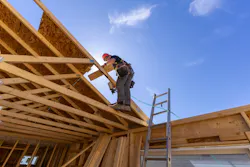
The resulting housing boom could also create productive work as artificial intelligence and automation reshape other parts of the labor market. Home building remains grounded in local labor, skilled trades, materials, transportation, finance, and community investment, a once-reliable infrastructure that is showing its cracks.
Housing Supply and Demand
History suggests that well-designed housing policy can unlock substantial private investment and economic activity. The U.S. cannot solve its housing crisis by redistributing an inadequate supply of homes among a limited number of qualified buyers. We must build while also creating responsible financial demand.
We must remove unnecessary barriers to attainable housing. We must expand the skilled construction workforce. We must make starter homes financially viable again—an objective advanced by the recently enacted 21st Century ROAD to Housing Act.
And we must create practical financial tools that help responsible working families afford rent and mortgages and bridge the gap between renting and owning.
People who believe they have a future invest in that future. They purchase homes, start businesses, raise families, and strengthen their communities. But people who see no realistic path forward begin looking for another economic system.
Perhaps the rise of democratic socialism is not America's destination. Perhaps it is America's warning signal.
If affordability is driving Americans toward democratic socialism, then restoring affordability—with housing at the core—may be one of the most effective ways to preserve free enterprise.
After World War II, the U.S. used smart policy to help ignite a historic housing boom and expand the middle class. Imagine what another housing boom could do for Americans today.
About the Author
 John Dawson
John Dawson
John Dawson is executive director of Habitat for Humanity Walworth County in Delavan, Wisc., and founder of Growth Plan USA.