What Other States Can Learn from Georgia's Permitting Reform
Key Highlights
- Georgia Senate Bill 447, now state law, sets clearer expectations for development application reviews, timelines, and accountability.
- The Georgia Residential Land Development Council is now advocating for more predictable final plat approvals and recording timelines.
- Scroll down to read the author's "5 Lessons for Builders in Other States"
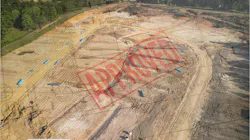
America's housing affordability problem doesn't begin when a builder pours a foundation. It often begins years earlier, when a developer attempts to turn a piece of land into a neighborhood.
I've spent nearly five decades in residential real estate and land development, and I've watched the process of bringing new homes to market become increasingly complicated, expensive, and unpredictable.
We talk a lot about construction costs, mortgage rates, and labor shortages impacting affordability, and they are legitimate concerns.
But there's another major contributor to housing affordability that doesn't get nearly enough attention: the cumulative cost of local land-use regulations and development approval processes.
In Georgia, we've been working to change that, and I believe our experience offers some practical lessons for home builders and developers across the country.
When Good Intentions Create Expensive Consequences
Zoning laws began with a reasonable purpose: separating incompatible land uses and protecting public health and safety. Nobody wants a chemical plant next to an elementary school.
But over time, zoning regulations have expanded far beyond those original objectives.
Today, local governments regulate minimum lot sizes, home sizes, setbacks, architectural requirements, landscaping, parking, and numerous other elements of residential development.
Individually, many requirements may seem reasonable. Collectively, they significantly increase the cost of producing a home.
Here's the problem: When home prices rise beyond what buyers can afford, builders need flexibility to respond. We might build smaller homes, reduce lot sizes, or introduce different housing types.
But in many communities, zoning ordinances won't allow that.
We have created a situation where builders are expected to solve housing affordability while being restricted in the types of homes they can provide.
As I wrote in my book, Zoned Out, housing affordability didn't disappear overnight. It was regulated away gradually.
The Hidden Cost of Waiting
Restrictive zoning is only part of the problem. The time required to obtain development approvals is equally damaging.
Consider a 31-lot development in Forsyth County, Ga., where delays added approximately $12,000 per lot in carrying costs. That's $372,000 in additional project expenses before a single homebuyer walks through the front door.
Those costs aren't theoretical. Developers continue paying interest, property taxes, engineering expenses and other carrying costs while projects wait for approvals.
And those expenses must be absorbed somewhere in the project's economics.
The longer a development sits, the harder it becomes to deliver homes at attainable prices. In some cases, projects that might otherwise be financially feasible no longer work.
What concerns me most is that these costs often stem from processes with unpredictable timelines and unclear expectations.
Builders can plan for known requirements. We can budget for infrastructure improvements and engineering standards. What we cannot reasonably plan for is an approval process that has no dependable endpoint.
Moratoriums Make the Problem Worse
Another troubling trend is using residential development moratoriums to manage growth.
When a city or county stops accepting or approving development applications, the pipeline of future homes begins to shrink.
A landowner may have spent years preparing property for development, only to have a moratorium halt progress. Contracts can expire. Financing costs continue. Engineers, surveyors, and attorneys have already been paid.
Meanwhile, the community still needs housing.
I understand that local governments face legitimate challenges involving roads, schools, utilities, stormwater management, and public services. Those concerns deserve thoughtful planning and responsible investment.
But stopping residential development doesn't eliminate the need for housing. It delays new home production while adding uncertainty and expense.
Communities can address infrastructure needs through capital improvement planning, utility expansion, updated development standards, and other measures without automatically bringing residential development to a standstill.
As I've said before, the solution to growth isn't to stop growing. It's to plan for growth.
The solution to growth isn't to stop growing. It's to plan for growth.
How Georgia Addressed the Problem
After years of experiencing these challenges firsthand, a group of Georgia land development professionals decided that identifying problems wasn't enough, so we decided to organize around practical solutions.
That drove the formation of the Georgia Residential Land Development Council, an industry-led organization focused on improving the regulatory environment for residential development and helping make homeownership more attainable.
Our approach has been to bring real-world development experience into conversations with state legislators and other decision-makers.
We aren't asking government to abandon its responsibility to protect public health, safety, or infrastructure. We're asking for accountability, transparency, and predictability in the development process.
Our work helped advance Georgia's Senate Bill 447, permitting reform legislation that took effect July 1, 2026.
The legislation establishes clearer expectations for development application reviews, including timelines for determining whether applications are complete and for conducting subsequent reviews. It also addresses written explanations for denials and other measures intended to improve accountability.
These reforms recognize a simple principle: Government should have reasonable time to review development applications, but applicants should also have a reasonable expectation of when decisions will be made.
A predictable process benefits everyone. Local governments can enforce their standards, developers can plan projects more effectively, and communities can better anticipate future growth.
These reforms recognize a simple principle: Government should have reasonable time to review development applications, but applicants should also have a reasonable expectation of when decisions will be made.
The Next Challenge: Final Plat Reform
Passing permitting legislation doesn't mean the work is finished.
In Georgia, we're now focusing on another significant source of uncertainty: final plat approvals.
By the time a residential development reaches the final plat stage, the developer may have already invested substantial capital in land acquisition, engineering, infrastructure, and construction.
Yet delays in final plat approval or recording can prevent finished lots from moving into the homebuilding pipeline. The financial consequences can be significant.
Our goal is to establish reasonable timelines for final plat recording, improve the consistency of approval requirements, and eliminate unnecessary procedural delays once applicable standards are met.
The objective isn't to avoid inspections or bypass legitimate requirements. It's to ensure projects that meet established standards can move forward without unpredictable additional costs.
Affordability Starts Before Construction
We cannot solve America's housing affordability problem through construction efficiencies alone.
Builders can improve designs, manage materials more effectively, and find new ways to reduce production costs. But those efforts have limits when local regulations dictate larger lots, more expensive homes, and unpredictable development timelines.
If we want more attainable housing, we must examine the policies that determine what can be built and how long it takes to build it.
Georgia's permitting reform efforts demonstrate that builders and developers can help move that conversation toward practical legislative solutions.
My hope is that industry professionals in other states will look closely at the challenges in their own communities, document the costs, and begin working toward improvements.
Because the homes America needs tomorrow depend on the land development decisions we make today.
5 Lessons for Builders in Other States
Georgia's experience offers several lessons that I believe can translate to other jurisdictions.
First, document the problem. General complaints about bureaucracy rarely produce meaningful change. Specific examples showing how delays affect project costs, housing supply, and affordability help explain what's at stake.
Second, organize around common goals. Builders, developers, engineers, and other industry professionals often experience the same challenges. A coordinated effort gives those concerns a stronger voice.
Third, focus on practical reforms. Clear application requirements, reasonable review deadlines, objective standards, and written decisions are understandable goals to discuss with policymakers.
Fourth, recognize legitimate government responsibilities. Infrastructure capacity, environmental protection, and public safety matter. Reform should improve the process while maintaining necessary protections.
Fifth, understand that reform is ongoing. Passing legislation is an important milestone, but implementation, enforcement, and additional improvements require continued engagement.
Every state has different laws, political considerations, and development challenges. Georgia's approach won't translate word for word everywhere, but the underlying principles can.
About the Author
 Jay Knight
Jay Knight is a longtime residential developer, chairman and co-founder of the Georgia Residential Land Development Council and author of Zoned Out: How Cities and Counties Make Homes Unaffordable. With nearly five decades of experience in residential real estate, homebuilding and land development, Knight advocates for practical reforms that improve the development process and make homeownership more attainable.
Related
 New single-family community under construction
 Photo: Unsplash/David Beale