How Does Nationwide Building Activity Compare to Local Levels?
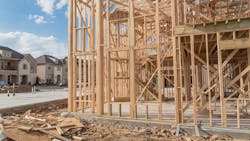
Over the past decade or so, the nationwide housing market has seen single-family building permits surge and then gradually decline due to a lack of buyer demand and rising building costs. However, this level of activity isn’t necessarily the same in every local market.
To more accurately forecast housing market activity, the National Association of Home Builders developed the Single-Family Market Association Index, which compares local single-family permit data to nationwide trends from 2015 to 2024. Through the index, NAHB created five- and ten-year correlations for each of the 387 metros analyzed, which were then averaged to create rankings.
Southern metros matched nationwide trends the closest
Many of the metros that had the highest correlation with nationwide trends were located in the South, where new-home inventory has generally grown faster. The San Antonio-New Braunfels, Texas metro correlated the closest with nationwide trends, followed by Tucson, Ariz., and then Odessa, Texas.
Metros in the Northeast and Midwest matched nationwide trends the least
While many Northeastern and Midwestern metros were less likely to see a correlation between nationwide trends, it was Boulder, Colo., that had the lowest score. Following behind Boulder, Colo., is Elmira, N.Y., and then Lancaster, Pa.
While the study looks at permit activity from 2014 to 2024, 2025 data show nationwide single-family activity has been slow
- Single-Family Permits Fall, While Multifamily Sector Sees Slight Uptick: In June, single-family building permits fell for the sixth consecutive month.
- Single-Family Permits Continue to Decline in August: As of August, single-family permits were down by more than 7% year-to-date.