
I’ve seen thousands of windows installed across the country, typically handled by a builder’s framing or cornice crews, the window manufacturer, or third-party installers that specialize in window placement.
While the process is generally straightforward, it quickly becomes complicated by one critical factor: every window manufacturer has its own installation requirements, which can cause confusion or complacency when the installation crew or a builder’s site supervisor does not pay attention to those differences. In fact, I’ve even observed windows installed incorrectly by a manufacturer’s own crew!
Such inconsistency creates risk. Improper fastening and flashing of a window unit can compromise water management, structural performance, warranties, and homeowner satisfaction.

Baseline Installation Steps
While manufacturer-specific instructions must always take priority, most proper window installations follow a similar baseline process:
- Preparation: Confirm the rough opening is plumb and level. Make sure the sill does not slope to the interior. Confirm that the window will fit the opening with the correct expansion gaps (typically 1/4" to 1/2") along both the width and the height of the opening. The window frame should not fit snug into the opening.
- Protect the sill: Install a premanufactured sill pan or create a site-built one using butyl or acrylic flashing tape.
- Dry fit and shim: Set the window into the opening, check for plumb, level, and square, and shim as needed to maintain perfect alignment.
- Sealing and fastening: Apply sealant behind the flange (except along the sill to allow for drainage), then tack the window temporarily in place. Permanently secure it to the rough opening through its nailing flange according to the manufacturer’s requirements for both fastener type and spacing.
- Flashing: Install flashing tape on the jambs and the head in that order—a shingle-lap sequence that prevents water intrusion.
- Create an end dam: If your sill pan does not have an integrated end dam, create one using ASTM C920 Class 25 sealant that goes along the bottom of the window and 6 inches up the jambs on the interior side of the window.
These steps are a good foundation, but are only effective when executed in strict alignment with the manufacturer’s guidance.
Critical Considerations Often Overlooked
Beyond the basics, the finer details of proper window installation are the most critical but also are often overlooked, as follows:
Fastening Placement: Any type of fastener, including those used for housewrap, that are placed too close to the rough opening can put undue stress on the flange. When fastening the window, the exact setback varies by brand, so it is essential to verify instructions for each brand and product.
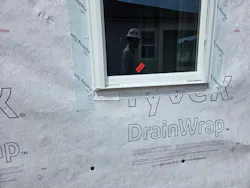
Fastener Type: Best practice is to use non-corrosive pan-head screws for better holding power and adjustability. Even so, I commonly see installers use roofing nails. The problem is that excessive nail-gun pressure can crack or break the flange, permanently compromising the installation and its performance and likely its warranty. Reference the window manufacturer and the local building codes to find the required fastener size and type.
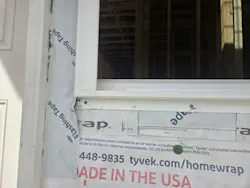
Flange Integrity: I have yet to see a manufacturer approve installation of a window with a damaged nailing flange, yet damaged fins are common, occurring during delivery, storage, or handling on site. Bent flanges prevent proper contact with sheathing or framing, creating gaps that flashing cannot reliably seal. Cracked flanges can lead to damage to the entire window, water intrusion, air leakage, pests and a variety of other issues. If a flange is damaged, the window should be repaired or (better yet) replaced, as stated by the manufacturer.
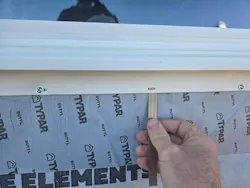
Water Management: Flashing must always follow a shingle-lap pattern to ensure that water flows downward and over—rather than behind—the flashing materials. This critical technique involves installing materials from the bottom up, starting with the sill pan, then the jambs, and finally the head, to prevent water leaks, rot, and structural damage. Any deviation increases the risk of water infiltration and its many ills.
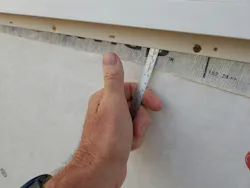
Why Windows Fail
Water Management Errors
- Missing or improperly installed head flashing or drip caps
- Incorrect flashing sequence that traps water behind the weather-resistive barrier (WRB)
- Sealing or taping the bottom flange, preventing drainage
- Lack of sill backslope to the exterior, leading to standing water and long-term rot
Structural and Alignment Issues
- Windows installed out of plumb, level, or square, causing operational failures
- Poor shimming that allows frames to bow or sag
- Incorrect rough-opening measurements, leading to oversized gaps or forced fits
- Damage to the nail flange from improper fastening
Insulation and Air-Sealing Mistakes
- Use of high-expansion foam that bows jambs and restricts operation
- Incomplete or sloppy exterior caulking
- Failure to maintain proper expansion gaps (typically 1/4" to 1/2")
Code, Warranty, and Compliance Risks
- Ignoring manufacturer instructions, which can void warranties
- Installing non-compliant windows in jurisdictions with stricter energy standards (such as California’s 2026 Title 24 requirements)
- Overlooking safety codes for tempered glass or egress windows
Why This Matters
Improper window fastening may seem like a small issue, but its consequences are anything but minor. Water intrusion, air leakage, operational failures, unbudgeted costs, and unhappy homeowners are all downstream effects of rushed or careless installation.
Window installation is not just about speed, it’s about precision. Attention to detail (ideally spelled out in your quality standards and checked by your site managers), adherence to manufacturer guidelines, and respect for building science principles are essential.
Getting it right the first time protects the home, the builder, and everyone involved in the process.
About the Author

Roy Fanara
Roy Fanara drives quality and innovation in homebuilding as a building performance coach at IBACOS.