What Does Your Sales Team Know About Quality?
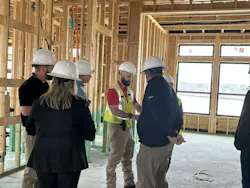
At IBACOS, I work directly with quality-minded builders to improve the quality and consistency of their construction practices through consulting, coaching, innovative software, and data analysis.
One important but often overlooked aspect of that process is training the builder’s sales staff on the details of top-quality construction.
In fact, salespeople shape customer expectations of a home’s “quality” long before building begins, establishing the expectations buyers will use to judge the performance of your homes.
And when salespeople understand what true built quality looks like, how it was achieved, and why it matters, they become better equipped to communicate the value of the homes they’re selling beyond features or location.
Selling What Customers Don't See
One of the biggest challenges in selling construction quality is that most of the important quality details are hidden behind the finishes, most of which will go unnoticed by a homeowner—unless (or until) something goes wrong.
That’s why it’s critical for buyers to understand the difference between the finishes they can see and the construction details that make a home perform well over time.
If that sounds like a complicated message filled with technical jargon, it actually creates an opportunity for builders to differentiate themselves in a competitive market and earn back the value of the time, effort, and money they’ve invested to deliver better-built homes.
A knowledgeable salesperson can help customers understand that quality isn't limited to the finishes they can see, or even the specific methods and materials behind them, but that quality also is found (and felt) in the details that improve indoor comfort and efficiency, prevent problems, and enable long-term durability. (see "The 11 Systems of a Quality Education" below.)
In short, a salesperson's job isn't to explain every technical detail, it’s to help the customer understand why those details matter.
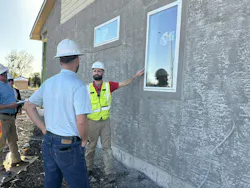
Put Salespeople in the Field
I always encourage home builders to invite salespeople onto the jobsite at various stages of construction to see and learn what quality looks like, led by your superintendents and engaging the crew leads from your trade partners to explain their work and practices.
At rough framing, show them structural details and workmanship. When you’re weatherproofing, point out flashing, windows, doors, roofing, siding, and penetrations. Prior to drywall, walk them through the plumbing, electrical, and HVAC runs, as well as insulation and air sealing. Show them the way you build a shower from waterproofing to tile, and extend that to other finishes, such as trim, flooring, cabinets, and paint.
And at every step, tell them the “why” behind the work, and how it delivers a quality build.
Seeing the work firsthand and the reasons and results behind what you require makes construction quality tangible and gives salespeople a better understanding of what they are actually selling.
It is also valuable to show examples of what happens when quality fails. Photographs of water intrusion, improperly installed insulation, drainage problems, or HVAC issues can help salespeople understand the connection between a construction detail and its consequences.
And lastly, share the quality standards, expectations, and quality control process you require of your superintendents and trade partners to underscore your commitment to quality, which not only enhances the sales team’s understanding, but also may inspire marketing and messaging ideas.
A salesperson's job isn't to explain every technical detail, it’s to help the customer understand why those details matter.
Creating A Culture of Quality
Quality cannot be delegated to one department. It has to pervade the entire operation, and the best builders build quality into their culture.
Quality education should continue after initial sales onboarding. Short training sessions can focus on specific construction details. Field walks can expose salespeople to various stages of construction. Construction teams can share common defects and lessons learned. Warranty data can identify areas where additional education may be valuable.
The sales team has a role because it establishes expectations with buyers. Construction has a role because it builds and delivers the home. Warranty has a role because it provides valuable feedback about the homeowner experience—all of which creates a valuable feedback loop of continuous learning and improvement.
From that effort, construction quality can—and should—be leveraged as a competitive advantage, no less valuable than design, location, or price point.
Training your salespeople on the details of top-quality construction gives them confidence, credibility, and a better (and distinctive) story to tell the customer. More important, it connects the promises made in the sales office to the home delivered in the field.
And when that connection is strong, quality stops being just a construction objective and becomes part of your brand.
The 11 Systems of a Quality Education
Sales training on construction quality should cover the 11 major systems and details that influence a home's performance and durability … and how to articulate them to buyers
- Site and drainage, including basic grading, swales, drainage, foundation elevations, and a site-specific stormwater pollution prevention plan. Translation: Managing water is a cornerstone of mitigating a whole host of problems, from moisture damage to mold.
- Foundations: Footings, slabs, waterproofing, underground plumbing, vapor barriers, concrete pour details, drainage, and backfill. Translation: These are the fundamental elements to protecting the structure and managing moisture.
- Framing: Basic structural framing, connections, openings, and workmanship. Translation: The quality of the finished home begins with the materials and how its built.
- Insulation and air sealing: Proper installation and building tightness. Translation: The elements that help ensure indoor comfort and energy efficiencies.
- Drainage plane: Weather-resistive barriers, windows, doors, flashing, and exterior penetrations must be properly integrated to manage water and moisture and protect the wall assembly. Translation: We take great care to control and mitigate water and moisture from causing latent problems.
- Exterior wall cladding: Sales should understand how claddings protect the exterior, but also works with the drainage plane, flashing, and other components of the wall assembly to manage water. Translation: The exterior finishes are the first line of defense against a variety of natural elements and part of a larger system to ensure long-term durability.
- Roofing: The finish material plus underlayment, flashing, penetrations, and ventilation that all contribute to a roof system that performs properly. Translation: Your roof is part of a comprehensive water-management system.
- Shower waterproofing: A properly installed, continuous waterproofing system behind the tile is critical to protecting the structure from moisture. Translation: We go well beyond the tile and grout to achieve a waterproof enclosure.
- HVAC: Duct installation, airflow, duct sealing, equipment design, installation, and the commissioning process. Translation: HVAC is a major contributor to household energy consumption and comfort, making proper design and installation critical.
- Plumbing and electrical: Basic installation principles, safety, leak and surge prevention, and workmanship. Translation: We do our best to prevent water leaks and electrical problems to reduce maintenance costs.
- Interior finishes: Drywall, trim, cabinets, flooring, doors, and paint. Translation: You enjoy finishes that are made from the best materials, installed correctly, show no defects, and last longer.
About the Author
 Clem Newcamp
Clem Newcamp is a dedicated professional serving as the manager of field services and client success at IBACOS, in Pittsburgh.
Related
 While the metrics for measuring quality in home building may vary, the ROI on building a quality product—up to 600 percent—is indisputable. (Photo: Pixabay)
 The cumulative effect of attention to detail is less frustration for the builder and for its customers. (Photo collages: Hans Slegers / 123RF, photo; Feng Yu / 123RF, type)