Update: Landmark Housing Bill Becomes Law

The 21st Century ROAD to Housing Act (H.R. 6644) became law on July 11 following a mandatory 10-day waiting period to allow President Donald Trump to sign or veto the legislation.
After the U.S. House of Representatives approved the bipartisan and bicameral bill with a resounding 358 to 32 vote and the Senate approved it with an 85 to 5 vote on June 22, the President cancelled a scheduled signing ceremony on June 24 to pressure Congress to pass the SAVE America Act, a sweeping elections reform bill.
The next day, House Speaker Mike Johnson sent the housing bill to the White House for the President's signature, starting the clock on a 10-day window for Trump to either sign or veto the measure before it automatically became law.
“The 21st Century ROAD to Housing Act will help expand the nation’s housing supply by reducing regulatory barriers and encouraging local governments to reform zoning and land-use policies that have limited home building," said NAHB Chairman Bill Owens in a blog post soon after the bill's passage.
5 Key Provisions
The ROAD to Housing Act features five key provisions to spur housing supply and help ease the affordability crisis, including:
- Targeting restrictive zoning and land-use policies that have limited residential construction and rewarding communities that adopt policies that expand supply and support housing growth;
- Authorizing a pilot program to provide grants and forgivable loans for home repairs and health-hazard mitigation in aging housing;
- Raising FHA-insured multifamily loan limits and indexing them to inflation to better align financing with construction costs;
- Streamlining the National Environmental Policy Act review process for small and infill housing projects;
- Strengthening community banks to expand access to housing credit.
Protecting Built-to-Rent
Earlier versions of the bill included a provision that would have required institutional investors to sell build-for-rent (BTR) single-family homes within seven years, which NAHB and others successfully opposed on the basis that it would reduce investment in much-needed built-to-rent housing.
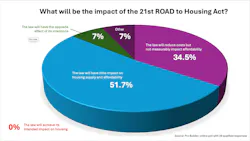
RELATED CONTENT:
In addition to the blog post, you can watch this video from NAHB's Federal Legislative Director Evan Loukadakis, who led the association's advocacy team to help refine the bill and bring both houses of Congress together to pass it.
About the Author
 Rich Binsacca, Head of Content
Rich Binsacca, Head of Content
Rich Binsacca is Head of Content of Pro Builder and Custom Builder media brands. He has reported and written about all aspects of the housing industry since 1987 and most recently was editor-in-chief of Pro Builder Media. rbinsacca@endeavorb2b.com