
Socially Exceptional: The Best of The Nationals
Key Takeaways
- Authentic storytelling and real user participation significantly boost engagement and emotional connection with audiences.
- User-generated content extends campaign reach and builds trust through personal advocacy from community members.
- Consistency in branding and messaging ensures a cohesive campaign experience across multiple channels and teams.
- Advance planning and flexible contingency strategies are crucial for maintaining momentum and adapting to unforeseen challenges.
This article also appeared in the July/August 2026 issue of Pro Builder.
Editor's note: The print version of this article contained the following errors, which have been fixed here and in the digital edition, as follows:
- Stephanie Darden Bennett is the chief creative officer for Prismatic
- The homes at Big Sky Quarry are not modular or built using factory production methods
- Big Sky Quarry has not opened as of the date of the article's publication
Pro Builder regrets the errors.
When it comes to social media campaigns, “We can’t afford to make more white noise,” says Stephanie Darden Bennett, president and chief creative officer for Prismatic, an Orlando-based branding and marketing agency. “You don’t want to create more push marketing that’s just transactional. It’s important to invite people to share and become part of the community.”
That kind of relationship building is key to the strongest social media campaigns, evidenced by the creativity, strategy, and ultimate successes of those who earned recognition in that category from the National Sales & Marketing Awards this year.
Profiled here, the experts share their “must-dos” for successful campaigns that know their audience, build a clear concept, inspire people to participate, and maintain enough structure to keep the message coherent over the length and breadth of the initiative.
1. Inspire Authenticity
The most effective campaigns are not the ones that sound the most polished or promotional, but the ones that give audiences something real to connect with.
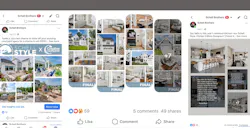
Schell Brothers’ “Schell Style” campaign exemplifies that sentiment. The social-only design competition encouraged its homebuyers to share their sense of style, which is about as real as you can get.
“We wanted to highlight the creativity of our homeowners,” says Maggie Dawson, social media specialist for the Delaware-based builder. So, they put the storytelling in their hands.
Using Facebook, which Dawson says is most impactful channel for their target audience, the team sent details of the competition to its homeowners in Virginia, Tennessee, Idaho, and Delaware to enter the best kitchen, best home, best outdoor space, and, in December, best holiday spirit.
The builder received 124 entries across those categories, from which a panel of judges among its marketing and design teams selected ten finalists—and ultimately a winner—in each category. Facebook followers then voted to determine a people’s choice winner.
Finalists and winners had their entries professionally photographed on Schell’s dime and shared on social media.
The results: 3,504 reactions, 578 comments, and 252 shares, not to mention thrilled homeowners and intrigued prospects.
“It was our highest engagement campaign of 2025 and significantly increased brand exposure and buyer interest,” Dawson says.
The idea that the customer completes the brand story is what made the campaign resonate. It was not simply a contest; it was recognition.
“People engage more deeply when they can imagine themselves in the experience being presented,” she adds, and proved that when social content invites participation, it creates stronger emotional buy-in.
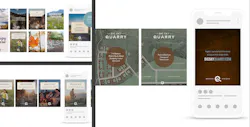
Big Sky Quarry in Big Sky, Mont., is a 175-acre mixed-use community including 135 single-family homes and 130 apartments.
For its social media campaign launched prior to groundbreaking across Instagram, LinkedIn, and Facebook, authenticity came from the character of the location and by producing original content that revealed Big Sky through a seasonal, local lens of events, businesses, and outdoor experiences.
“We used the natural surroundings as the core amenity,” Bennett says. “It’s more than buying a home. You’re buying a piece of Big Sky and a year-round, nature-centric lifestyle.”
Within just nine weeks, the campaign garnered roughly 9,000 impressions, reached more than 12,000 people, generated more than 400 engagements, and produced more than 200 qualified leads with a budget of $5,000 per month and zero paid advertising.
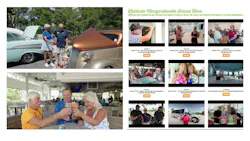
Likewise, Latitude Margaritaville, a pair of 55+ master-planned communities in Florida and South Carolina by Minto Communities, produced a series of in-person interviews with homeowners to deliver authentic, story-driven content about the Margaritaville lifestyle, from workout facilities, group activities, and hobbies.
The weekly videos ran for 15 months on a dedicated YouTube channel, garnering an astounding 118,987 views and about 6,454 hours of watch time, generating 712,272 impressions and 464 new subscribers, and ultimately earning the campaign a coveted Gold award from The Nationals in the social media category.
2. Gather User-Generated Content
Schell Brothers and Big Sky Quarry learned the importance of letting homeowners become advocates for the brand.
As Dawson says, “Their friends are brought to our page, and they see homes and see what we do.” In other words, user-generated content (UGC) extended the reach of their respective campaigns through trusted personal networks.
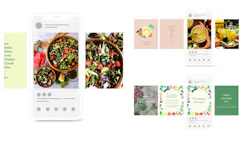
For The Grow, a PulteGroup agrihood featuring 2,100 homes now under construction in Orlando, Fla., Bennett used UGC to produce The Grow Community Cookbook.
Launched more than a year before construction began on the parcel, the digital-forward crowdsourcing initiative invited people to contribute recipes, photos, and personal stories behind their culinary creations as a way of creating human community before the physical community was built.
“There was a lot to unpack as far as what an agrihood is for people to see themselves living here,” Bennett says.
Rather than pushing transactional sales messages, the campaign created a non-transactional relationship with followers through the recipes and stories they shared, raised awareness of local agriculture, and honored the spirit of The Grow.
The campaign will continue indefinitely, but within the first five months it generated 5,171 impressions, 314 engagements, 16,896 views, and 16 published recipes.
An additional benefit of UGC is that it can be kept in perpetuity. “With our campaign last year, we not only increased engagement with our existing homeowners, but also captured an incredible library of authentic photography showcasing real homes, real stories, and real life in our communities,” says Alyssa Titus, director of market at Schell Brothers. “The result provides lasting value for our marketing efforts for years to come.”
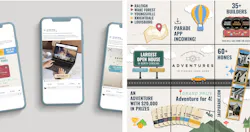
Even winning campaigns that were not fully UGC-driven still relied on audience participation. The Jim Allen Group’s Parade of Homes’ app included a gamified experience: visitors checked in through geolocation and were able to “spin” a digital wheel to win prizes, thus giving them a reason to engage beyond passive viewing.
3. Be Consistent
To make a social media campaign feel intentional and not scattered, “start with a brand guide,” says Ann Clayton, account director at Able&Co., the agency of record for a Parade of Homes campaign created for The Jim Allen Group (JAG).
The brand guide outlines everything from the campaign’s tone of voice, the color palette, the style of graphics, and how to message the theme.
“It’s a shared framework that ensures consistency and continuity,” she says.
In a campaign as large and distributed as JAG’s parade effort—featuring 60-plus homes, 35 builders, and multiple marketing channels—inconsistency could quickly dilute the message.
A brand guide also enables collaboration when you have many teams—agency partners, internal staff, and client teams—working to support a campaign. Such consistency doesn’t limit creativity, Clayton says, it ensures that everyone is building from the same foundation.
And it payed off, as the campaign generated 1,209 leads, $35.7 million in sales volume, and more than 21,000 website visits, all within a budget of less than $35,000, including video.
Builders Design offers a different version of consistency. A national interior design and merchandising firm, Builders Design prioritizes educating and supporting home builders, multifamily developers, and senior living providers with current and forecasted trends in paint colors, interior design, furniture, fit and finish, kitchen cabinetry, flooring, lighting, and more.
“Anything you can think of in the home, we’re researching it,” says CEO Joe Duffus.
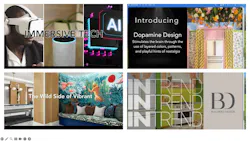
The firm’s “Trends Tuesday” campaign is a weekly video promotion, which translates the company’s 250-page research publication, InTrend, into digestible, recurring social content.
That rhythm gives the campaign editorial continuity, making thought leadership feel sustained rather than sporadic. The campaign resulted in 37,000 total impressions, boosted engagement by 10% and grew the company’s LinkedIn following by nearly 400 people.
4. Plan Ahead
You can’t be ready for everything, but planning a campaign well in advance with enough structure to support execution and enough flexibility to handle the unexpected is a critical key to success.
Clayton and Kristina Sandine, The Jim Allen Group’s director of marketing strategy & operations, certainly didn’t anticipate that Hurricane Helene, which decimated Asheville, N.C., in September of 2024, would negate the campaign’s grand prize of an expense-paid trip to that city.
So, they pivoted—redoing signage, creating a hurricane relief fund, and offering cash prizes for the winners in lieu of the vacation package. If not a precise contingency, the alternative provided enough structure without losing momentum toward building out a full campaign rather than rushing disconnected tactics to market.
Pre-planning social media posting cadence also is important. “To have a successful campaign, it must be in tandem with creative production,” Sandine says. “Plan what will happen on each day; you don’t want people posting on top of one another.”
She also stresses the importance of campaign calendars when multiple people are involved. “If you didn’t have that, you’ll be cannibalizing yourselves.”
Across all these award winners, the message is consistent: social media campaigns succeed when they are audience-aware, participatory, disciplined, and deliberate.
Whether the goal is selling homes, elevating thought leadership, launching a new community, or celebrating customers, the best campaigns do more than fill a content calendar. They create a coherent experience that inspires participation.
The National Sales & Marketing Awards, also known simply as "The Nationals," is produced annually by the National Association of Home Builders (NAHB), with awards bestowed at the annual International Builders' Show. Entries are now being accepted through September 21, 2026 at thenationals.com.
About the Author
 Stacey Freed
Stacey Freed
Stacey Freed, a freelance writer based in Rochester, N.Y., covers design and building.