Value Engineering: A Cornerstone of Custom Home Building

Value Engineering: A Cornerstone of Custom Home Building
The Carolla Build Idea Home, a collaboration between Pro Builder and actor, comedian, and podcaster Adam Carolla in the Las Vegas area, has reached the make-or-break milestone of custom home building—the moment when vision meets reality and budgets get tested.
As Carolla Build continues its steady progression through design and preconstruction, the project has entered one of the most instructive phases in a custom build—when the client, architects, engineers, interior designers, and builder work together to align dreams with budgets and refine a path toward the final design that can be built efficiently.
An Essential Discipline
For Las Vegas-based Primaris Custom Homes and Carl Martinez, the home’s builder, this stage of value engineering the project is not a hurdle but instead an essential discipline that separates successful projects from those that stall before breaking ground … and happens more often than one might think.
“Sixty to 70 percent of the time we work to value engineer projects,” says Martinez, who has managed hundreds of custom homes throughout his career.
That reality highlights how typical and necessary it is at this phase of a project to revisit expectations once architectural concepts meet structural requirements and actual cost estimates.
A Creative Exercise
To Martinez, value engineering is a creative problem-solving process that allows him and other builders to guide clients — whether design professionals or homeowners — toward a version of their dream home that fits both lifestyle and budget.
Architects imagine possibilities and engineers protect structural performance, he says, and the builder serves as the bridge between them.
“Value engineering is really about creative thinking in construction,” he adds. “Engineers are very good with numbers, and architects want to create a beautiful space. But in the end, everything has to line up with the budget in order to get the home built.”
For the builder, Martinez believes the goal is never to diminish the design, but to bring plans into balance with the real world.
A Three-Phase Process
Martinez organizes value engineering into three deliberate phases. Each phase increases in intensity, which is why he works to resolve as much as possible before ever reaching the final stage. The earlier the adjustments are made, he says, the easier it is to keep a project moving without delays or major plan revisions.
Phase One: Quick and Easy Choices
Phase One focuses on what Martinez calls the quick and easy choices. These are obvious corrections that do not impact the structure, operation, or overall design intent of the home.
Think oversized amenities, site improvements, and overly complex mechanical systems that push costs too high. Similarly, homeowners may envision expansive decks, complex water features and pools, or extensive landscape elements that can be scaled back.
“The reality is often the first set of plans from the architect are a pipe dream, and Phase One takes it back to reality,” he says.
Reducing, resizing, or simplifying these items can trim a meaningful portion of the budget without changing the broader project.
Phase Two: Cut the Fluff
If the client appreciates the savings but still needs a lower cost, Martinez moves to Phase Two. He calls this stage “The Fluff,” referring to wish list items that are attractive but not essential.
Examples might include an outdoor tub or shower, a complex water feature, or some high-end landscaping.
Phase Two can also include strategic substitutions that avoid altering the construction drawings, such as prewiring for solar panels instead of installing the full system. Material and product selections also become part of the conversation. High end appliance packages, for example, can be replaced with quality alternatives at a lower cost.
To help homeowners make decisions, Martinez prepares a detailed checklist that identifies all the different features of the home and their associated costs.
“They can just go through and pluck what they are willing to do without to get to a price point they are comfortable with,” he says.
Most projects are resolved by the end of Phase Two. But if not, the process becomes more serious and impactful.
Phase Three: The Wish List
Phase Three is when true sacrifices occur, when cutting into the wish list gets deeper and architectural plans are likely to change.
“This phase can be tough on the customer and also pose a lot of challenges for us as the builder to maintain a good relationship,” Martinez says.
Rooms may be removed or square footage reduced, requiring major portions of the plans to be redrawn … which usually triggers updates to mechanical, plumbing, electrical, and landscape designs and specifications.
In markets like Las Vegas, such changes also require resubmitting for building permit review and approval, which can add several months to the schedule. For that reason alone, Martinez works hard to solve budget challenges in the earlier phases and preserve the original design of the home.
His approach to value engineering is shaped by years working in a design-build environment in which he manages both plan development and construction.
That approach gives him a detailed understanding of how design decisions influence final costs, and also taught him that collaboration early and often with design professionals, trade partners, suppliers, and homeowners is the best way to deliver a “dream” home that meets (and ideally still exceeds) expectations.
“It is the difference between a successful build with a happy customer and a long drawn out, probably over budget, unhappy customer,” he says.
For the Carolla Build Idea Home, entering this phase reflects a natural and healthy progression of his process. Value engineering ensures that the final design is clear, achievable, and aligned with the client’s goals.
For Martinez, guiding homeowners through this process is part of the craft.
“It is like a journey,” he says. “I don’t mind being the guide.”

Read More:
 Carolla Promo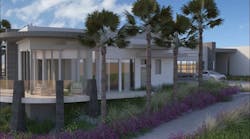
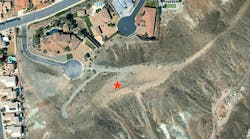


 This rendering of the Carolla Build Idea Home shows how the Rockery Wall blends into the overall design and the natural landscape.
About the Author
Andrew Hunt
Andrew Hunt writes about building science and the built environment.